
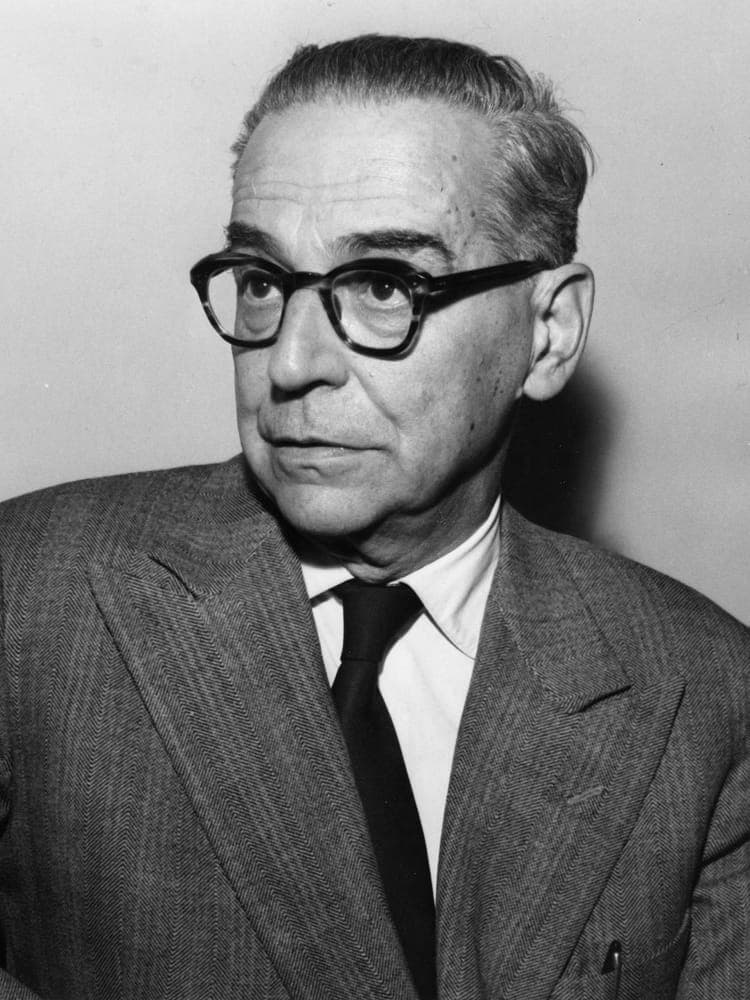
Author
Ivo Andrić
- Lived
- Lived 1892 to 1975
- From
- From Yugoslav
- Born in
- Born in Dolac, Bosnia
Born Ivan Andrić on October 9, 1892, in the village of Dolac near Travnik in Austro-Hungarian Bosnia, the only child of a Catholic Croat silversmith who died of tuberculosis when his son was two, he was raised by his widowed aunt and uncle in Višegrad, the river town whose Ottoman bridge would later carry the title of his most famous book. He attended the gymnasium in Sarajevo, joined the Young Bosnia movement of South Slav nationalists, and was arrested two weeks after the assassination of Archduke Franz Ferdinand in 1914, on suspicion he had known the killers. He spent the war under house arrest, reading and writing the prose poems of Ex Ponto (1918). After the war he took a doctorate at Graz on the history of spiritual life in Ottoman Bosnia and entered the diplomatic service of the new Kingdom of Yugoslavia, rising to ambassador in Berlin in 1939. The German invasion of April 1941 ended his career. He returned to occupied Belgrade and spent the war in a friend's apartment, refusing to publish, working in secret on the three Bosnian novels published in 1945, The Bridge on the Drina, Bosnian Chronicle, and The Woman from Sarajevo. The first follows four centuries of life around the great stone bridge at Višegrad, the empires that came and went over it, the impalings and weddings and floods. The Nobel Committee cited the epic force with which he traced themes drawn from his country's history when it awarded him the prize in 1961. He died in Belgrade on March 13, 1975, at the age of eighty-two.
During the German occupation of Belgrade, Andrić rented a single room in a friend's apartment and refused every request from the puppet authorities to sign their propaganda or publish under their rule. Confined there for three years, he wrote The Bridge on the Drina and Bosnian Chronicle almost entirely in secret.
The first button needs the app on this device; the second gets it there.
In the canon
- The Bridge on the Drina1945
- Bosnian Chronicle1945