
Author
Jamal al-Ghitani
- Lived
- Lived 1945 to 2015
- From
- From Egyptian
- Born in
- Born in Juhayna, Egypt
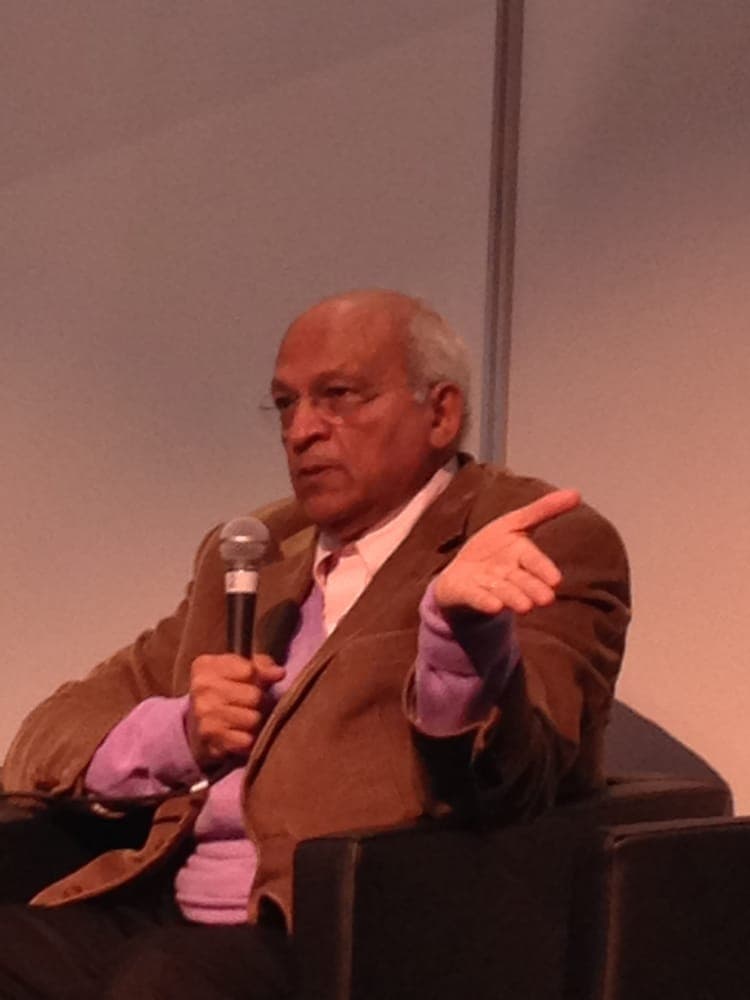
Born on May 9, 1945, in the village of Juhayna in Sohag, Upper Egypt, to a family so poor that his father worked as a laborer for the Ministry of Agriculture, Gamal al-Ghitani moved with his family to Cairo as a small child and grew up in Gamaliya, the same warren of medieval alleys and mosques that Naguib Mahfouz, a generation older, had already made the setting of his fiction. He trained as a carpet designer at the Artisan School of Arts and Crafts, graduating in 1962, and worked among the looms of Khan al-Khalili while publishing his first short story at fourteen. In October 1966 he was arrested for his critical writing against Gamal Abdel Nasser's government and held for months; on his release he returned to the same artisans' cooperative as a secretary before turning to journalism in 1969. For five years he filed dispatches as a war correspondent for Akhbar al-Yom, covering the front through the October 1973 war. His 1974 novel Zayni Barakat, built from the real sixteenth-century chronicles of Ibn Iyas, cast a Mamluk governor's network of spies and informers as a thinly veiled portrait of Nasser's police state, and became one of the defining Arabic novels of its century, later published in English with a foreword by Edward Said. He went on to write more than forty books, among them The Book of Epiphanies and Pyramid Texts, edited the newspaper Al-Akhbar, and in 1993 founded the literary weekly Akhbar al-Adab, which he ran until 2011. His honors included Egypt's National Prize for Literature, the French Chevalier de l'Ordre des Arts et des Lettres, and the Sheikh Zayed Book Award. He married the journalist Magda El-Guindy and had two children. A heart attack in August 2015 left him comatose, and he died two months later, on October 18, 2015, at a military hospital in Cairo, at the age of seventy.
In 1966, plainclothes police arrested the young carpet designer over his political writing and held him for months. On his release he went back to Khan al-Khalili, not to the looms this time but to a desk, as secretary of the same artisans' cooperative that had trained him.
The first button needs the app on this device; the second gets it there.
In the canon
- Zayni Barakat1974