
Author
James Baldwin
- Lived
- Lived 1924 to 1987
- From
- From American
- Born in
- Born in Harlem, New York
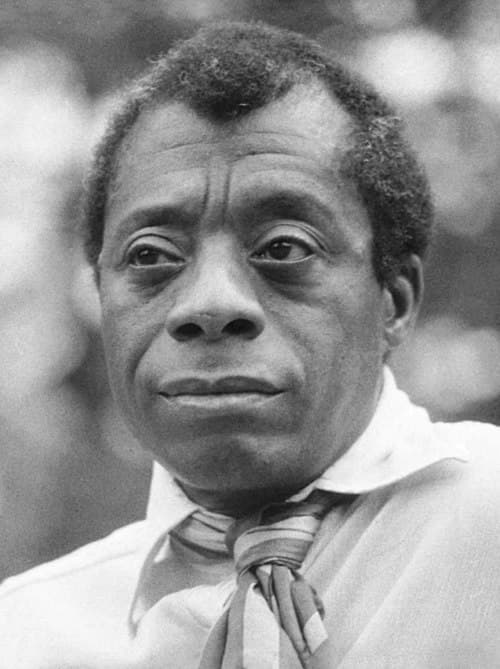
Born on August 2, 1924, in Harlem, New York, James Arthur Baldwin never knew his biological father. His mother married David Baldwin, a laborer and storefront Baptist preacher, in 1927, and the boy grew up the eldest of nine children in grinding poverty, with a stepfather whose religious severity and racial bitterness would fuel his greatest fiction. Between the ages of fourteen and eighteen, Baldwin himself preached at a small Pentecostal church, an experience that gave his prose its incantatory rhythms and moral authority. He graduated from DeWitt Clinton High School in the Bronx, where his classmates included Richard Avedon, and worked odd jobs while writing. In 1948, at twenty-four, he fled to Paris with forty dollars in his pocket, unable to endure the racial suffocation of America any longer. Go Tell It on the Mountain (1953), his first novel, drew on his Harlem boyhood and church years. Giovanni's Room (1956), set in Paris and centered on a white American's doomed love affair with an Italian man, defied every expectation of what a Black writer should produce. Notes of a Native Son (1955), Nobody Knows My Name (1961), and The Fire Next Time (1963) established him as the most penetrating essayist on race in the English language. He became a central figure of the civil rights movement and debated William F. Buckley at Cambridge in 1965 to devastating effect. He died on December 1, 1987, of stomach cancer, at his home in Saint-Paul-de-Vence, France.
At fourteen, Baldwin left Mount Calvary to follow the evangelist Mother Horn to her own storefront church, the Fireside Pentecostal Assembly, and there he began to preach himself. For several years his voice carried over that Harlem congregation, calling worshippers to the altar to weep and testify, years before he had published a single line.
The first button needs the app on this device; the second gets it there.
In the canon
- Go Tell It on the Mountain1953
- Notes of a Native Son1955
- Giovanni's Room1956
- Sonny's Blues1957
- Nobody Knows My Name1961
- Another Country1962
- Down at the Cross: Letter from a Region in My Mind1962
- Going to Meet the Man1965
- Tell Me How Long the Train's Been Gone1968
- No Name in the Street1972
- If Beale Street Could Talk1974
- Just Above My Head1979