
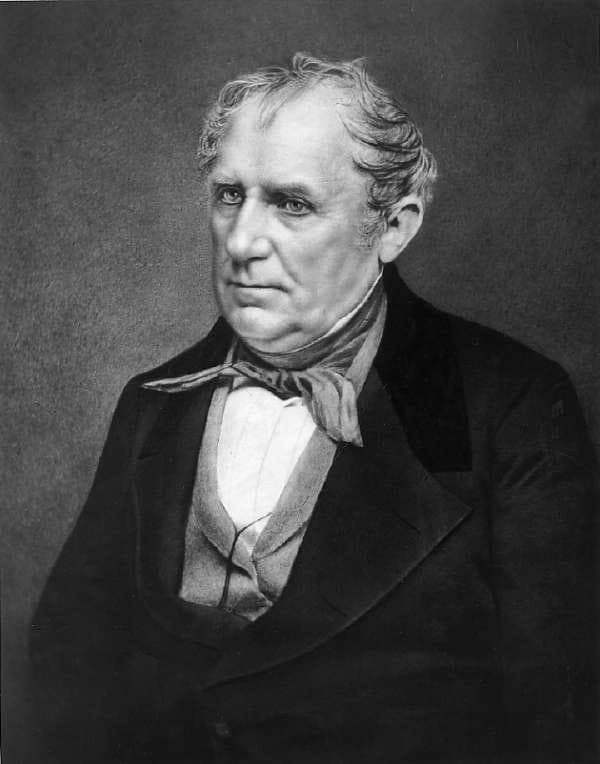
Author
James Fenimore Cooper
- Lived
- Lived 1789 to 1851
- From
- From American
Born on September 15, 1789, in Burlington, New Jersey, the eleventh of twelve children of Judge William Cooper, the founder of Cooperstown, and Elizabeth Fenimore, James Cooper moved at thirteen months to the family seat on Otsego Lake in central New York. There his father built Otsego Hall and ran the frontier town. Enrolled at Yale at thirteen, James was expelled in his third year after he blew up a fellow student's door and locked a donkey in a recitation room. He sailed before the mast on the merchant ship Sterling, then took a midshipman's warrant in the new United States Navy in 1811, learning the seamanship that would furnish a dozen novels. Marriage that year to Susan Augusta de Lancey, from a wealthy and loyalist Westchester family, ended the naval career. He turned to fiction, the legend goes, on a bet with his wife that he could write a better novel than the English one he was reading aloud; The Spy (1821), set in the Revolutionary War, made his name. The Pioneers (1823) introduced the old scout Natty Bumppo and the frontier of his Otsego childhood. The Last of the Mohicans (1826) carried Natty into the French and Indian War. Five Leatherstocking novels followed, written across nearly two decades. He lived seven years in Paris and London, returned to Cooperstown in 1833, and grew embattled in libel suits and political quarrels. He took the middle name Fenimore in 1826 in tribute to his mother. He died at Otsego Hall on September 14, 1851, the day before his sixty-second birthday.
The first button needs the app on this device; the second gets it there.
In the canon
- The Spy1821
- The Pioneers1823
- The Leatherstocking Tales1823
- The Last of the Mohicans1826
- The Prairie1827
- The Pathfinder1840
- The Deerslayer1841