
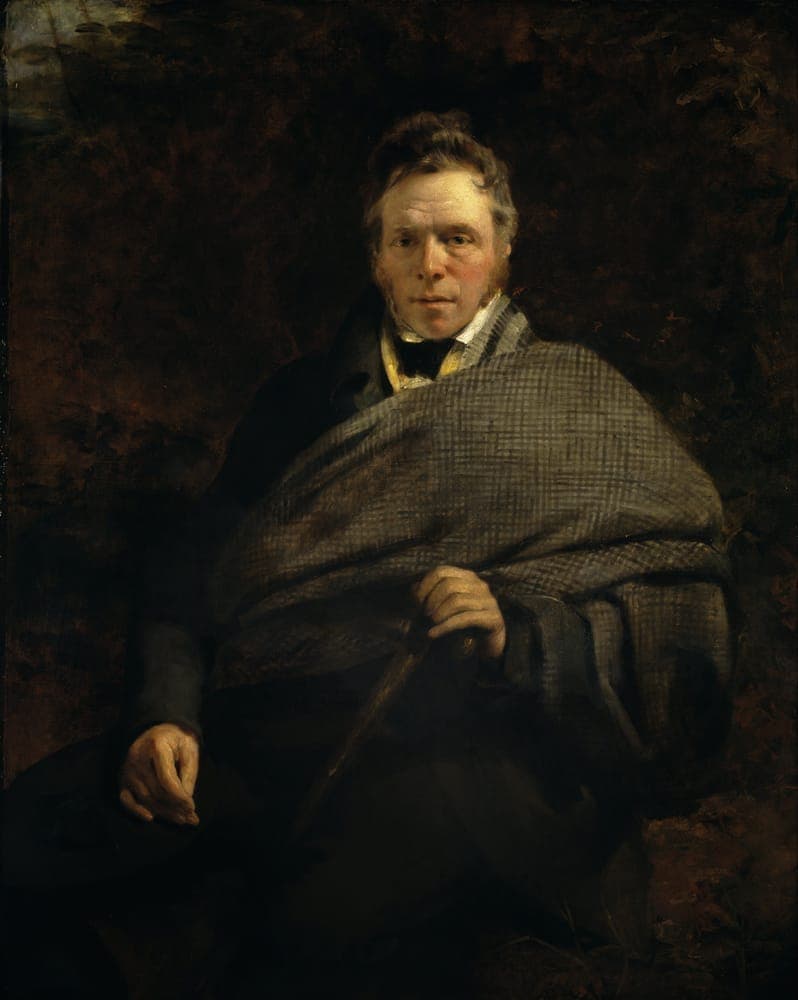
Author
James Hogg
- Lived
- Lived 1770 to 1835
- From
- From Scottish
- Born in
- Born in Ettrick, Selkirkshire, Scotland
Born on a small farm near Ettrick in Selkirkshire, Scotland, in 1770 and baptised on December 9, James Hogg was the second of four sons of a tenant farmer who went bankrupt as a stock-dealer, forcing the boy out of parish school after a few months and into farm service for the rest of his childhood. He worked as a cowherd, a shepherd's assistant, and then as a shepherd on the Yarrow valley farm of James Laidlaw of Blackhouse, who treated him like a son and opened his library to him. He taught himself to read while tending sheep, learned the fiddle from a borrowed instrument, and absorbed from his mother, a noted ballad-keeper, the songs that would shape him. His grandfather was reputed to have been the last man in the Borders to speak with the fairies. Walter Scott recruited him in 1801 to gather ballads for the Minstrelsy of the Scottish Border, and Hogg became Scott's lifelong friend and occasional irritant, later writing an unauthorised biography. He moved to Edinburgh in 1810 to live by the pen. The long narrative poem The Queen's Wake (1813) gave him his first real fame. He became a fixture of Blackwood's Magazine, where he appeared as the Ettrick Shepherd in the riotous Noctes Ambrosianae dialogues. His novel The Private Memoirs and Confessions of a Justified Sinner, published anonymously in 1824, was largely ignored in its day and waited a century for André Gide and others to recognise it as one of the strangest and finest novels of its century. He returned to a hill farm at Altrive on the Yarrow given him by the Duke of Buccleuch, and there he died on November 21, 1835, aged sixty-five.
In 1796, months after Robert Burns died, an itinerant reciter named Jock Scott performed 'Tam o'Shanter' for Hogg in the Ettrick hills. Hogg later said he was petrified with delight and would not let the man leave until he had it by heart. Learning that he and Burns shared a birthday, January 25, he resolved to become Burns's successor.
The first button needs the app on this device; the second gets it there.
In the canon
- The Private Memoirs and Confessions of a Justified Sinner1824