
Author
Jean Cocteau
- Lived
- Lived 1889 to 1963
- From
- From French
- Born in
- Born in Maisons-Laffitte, France
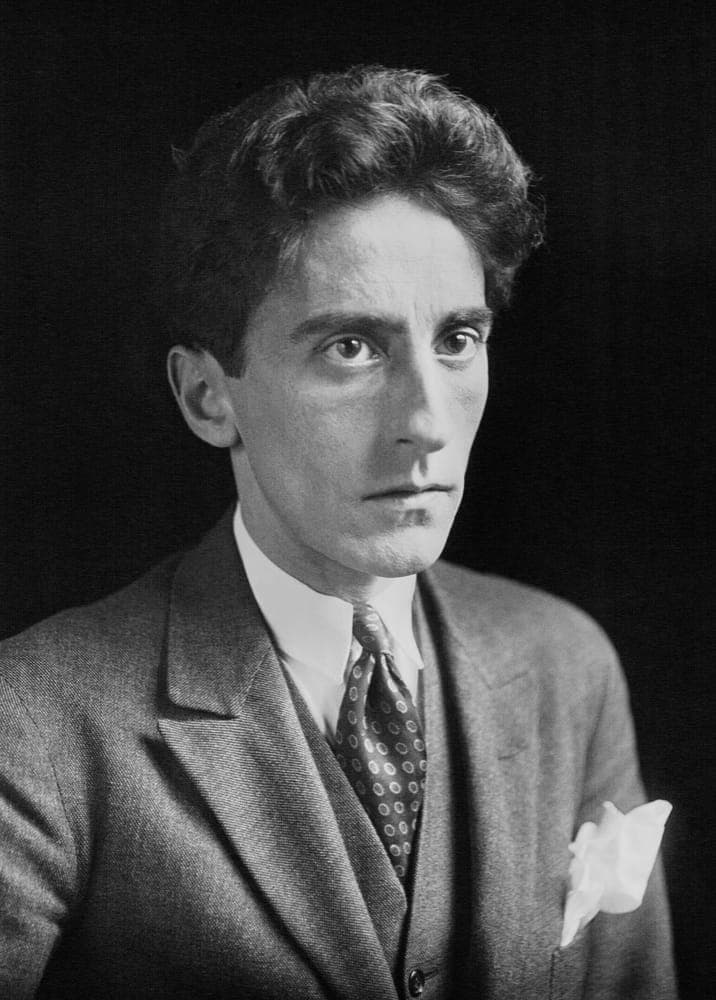
Born Jean Maurice Eugène Clément Cocteau on July 5, 1889, in Maisons-Laffitte outside Paris, the son of a lawyer and amateur painter who shot himself when the boy was nine, he was raised by his mother in a socially prominent household and attended the Lycée Condorcet, where he met the boy Pierre Dargelos whose memory would shadow his fiction for life. He left home at fifteen and published his first volume of poems at nineteen. Sergei Diaghilev told him in 1912 to astonish me, and three years later he did, writing the scenario for the Ballets Russes ballet Parade (1917) with sets by Picasso and music by Erik Satie. He served as an ambulance driver on the Belgian front, fell in with Apollinaire, Modigliani, and Picasso, and befriended the prodigy Raymond Radiguet, whose death from typhoid in 1923 sent him into the opium addiction he never fully shed. Les Enfants Terribles (1929), the story of the brother and sister Paul and Elisabeth locked in their snowbound room of secrets, was written in seventeen days during a detoxification cure. He turned the same currents to the stage, in La Voix Humaine (1930) and La Machine Infernale (1934), and to the cinema, in The Blood of a Poet (1930), Beauty and the Beast (1946), and Orpheus (1950). His companion of the last decades was the actor Jean Marais. He was elected to the Académie Française in 1955. He died of a heart attack at his country house in Milly-la-Forêt on October 11, 1963, at seventy-four, hours after learning of the death of his friend Édith Piaf.
In 1912 the impresario Sergei Diaghilev stopped the twenty-two-year-old poet on the Champs-Élysées and issued a single command: astonish me. Cocteau spent five years answering it, delivering Diaghilev the ballet scenario Parade in 1917, with sets by Picasso, music by Erik Satie, and a first-night riot in the stalls.
The first button needs the app on this device; the second gets it there.
In the canon
- Les Enfants Terribles1929