
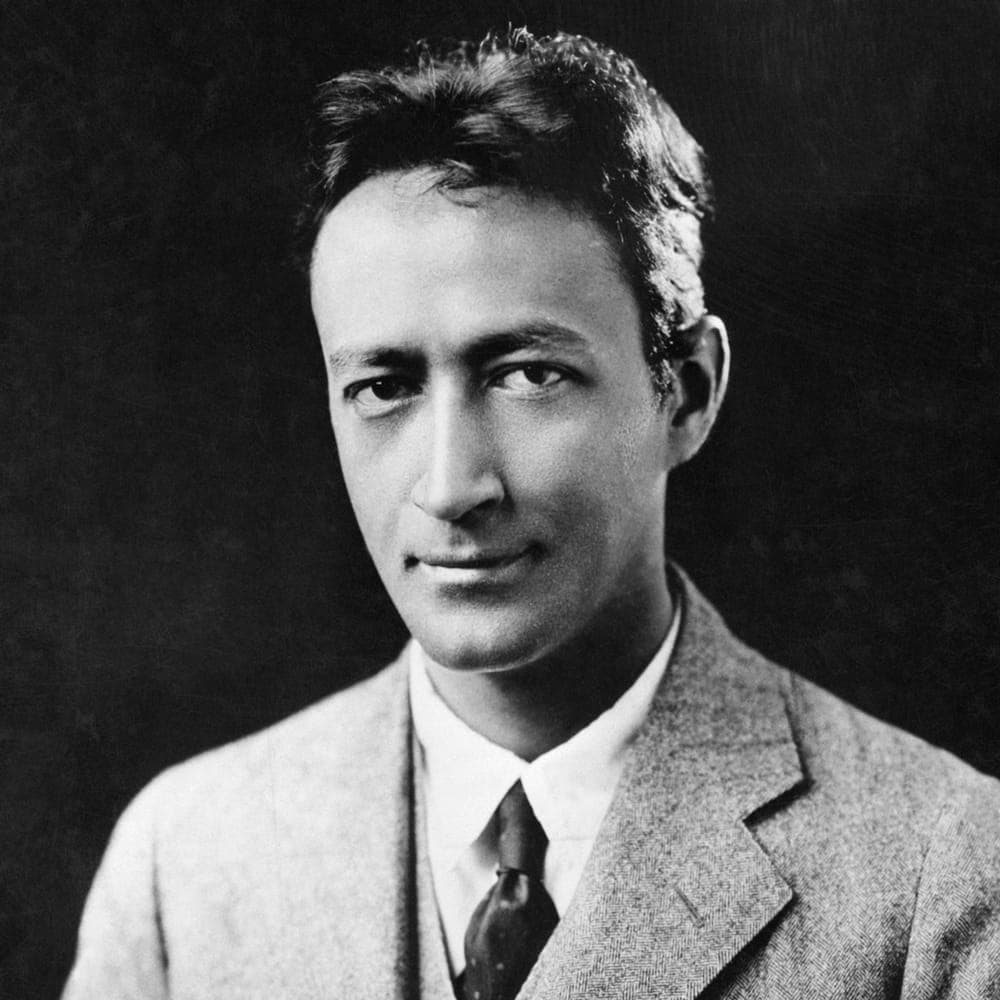
Author
Jean Toomer
- Lived
- Lived 1894 to 1967
- From
- From American
Born Nathan Pinchback Toomer on December 26, 1894, in Washington, D.C., he was raised in the comfortable household of his maternal grandfather, P.B.S. Pinchback, a Reconstruction-era politician who had briefly served as acting governor of Louisiana. His father abandoned the family before his first birthday, and his mother died when he was a teenager, leaving him to drift between relatives in Washington and New York. He enrolled at seven different institutions, including the University of Wisconsin and the City College of New York, studying agriculture, history, sociology, and physical education without completing a degree at any of them. In the autumn of 1921 he took a temporary post as a school principal in rural Sparta, Georgia, where the Black folk life of the South entered his imagination with sudden force. The result was Cane (1923), a mosaic of stories, sketches, and poems that moved between Georgia cane fields and Northern cities, becoming a founding text of the Harlem Renaissance. He published almost no fiction afterward. Drawn to the teachings of the mystic George Gurdjieff, he led study groups in Harlem and Chicago, married the novelist Margery Latimer in 1931, and after her death in childbirth the following year married Marjorie Content in 1934. He grew uneasy with racial categories, often refusing the label of Negro writer and describing himself simply as American. His later writings, including the long poem "Blue Meridian" (1936) and the play Balo, found few readers. He became a Quaker in the 1940s and settled near Doylestown, Pennsylvania. He died there on March 30, 1967, at the age of seventy-two, his single masterpiece long out of print.
The first button needs the app on this device; the second gets it there.
In the canon
- Cane1923