
Author
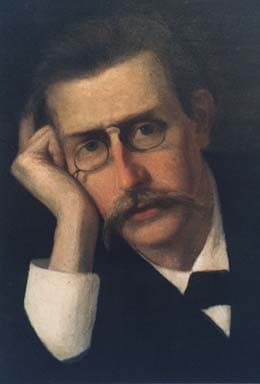
Jens Peter Jacobson
- Lived
- Lived 1847 to 1885
- From
- From Danish
- Born in
- Born in Thisted, Denmark
Born Jens Peter Jacobsen on April 7, 1847, in Thisted, a small port town in Jutland, the eldest child of a prosperous merchant family, he showed an early gift for the natural sciences and enrolled at the University of Copenhagen in 1868 to study botany, even as he was secretly writing poetry on the side. He set off across Denmark's islands cataloguing plants for a Copenhagen scientific society, and in 1873 he won the university's gold medal for a study of desmids, the microscopic freshwater algae found in the country's peat bogs. In these same years he became Denmark's foremost champion of Charles Darwin, translating both On the Origin of Species and The Descent of Man into Danish so his countrymen could read them. But 1873 also brought his diagnosis: tuberculosis, with little hope of a cure. Encouraged by the critic Georg Brandes, the leading voice of Scandinavia's Modern Breakthrough, Jacobsen set his microscope aside and turned to the historical novel he had been sketching, Fru Marie Grubbe, the story of a noblewoman's fall from aristocratic privilege into a life of her own choosing, published in 1876. His second and final novel, Niels Lyhne (1880), followed a young atheist through love, disappointment, and a death without the comfort of faith, and became the book that Rainer Maria Rilke called indispensable and that Thomas Mann credited as the deepest influence on his own prose style. Jacobsen wrote in short, exhausted stints as the disease closed in, producing only these two novels, a handful of stories, and a slim body of poems, among them the early cycle that Arnold Schoenberg would later set as his vast cantata Gurre-Lieder. He died at his mother's house in Thisted on April 30, 1885, not yet thirty-nine, the town of his birth also the place of his death.
In 1873, a promising young botanist, Jacobsen was diagnosed with tuberculosis and given little hope. He had just won Copenhagen University's gold medal for his research and finished translating Darwin's Origin of Species into Danish. He set down the microscope, turned to the novel Georg Brandes had urged him toward, and spent his last twelve years writing against the clock the diagnosis had started.
The first button needs the app on this device; the second gets it there.
In the canon
- Niels Lyhne1880