
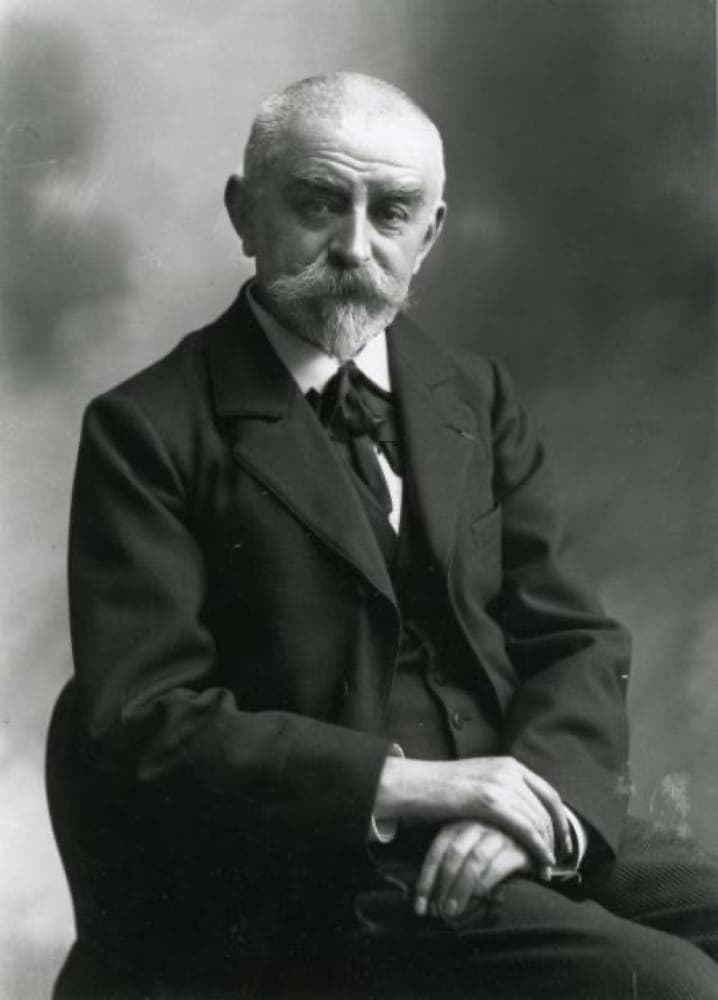
Author
J.K. Huysmans
- Lived
- Lived 1848 to 1907
- From
- From French
- Born in
- Born in Paris, France
Born Charles-Marie-Georges Huysmans on February 5, 1848, in Paris, he was the son of a Dutch lithographer and a French schoolteacher, and he adopted the Dutch spelling Joris-Karl in homage to his father's ancestry. His father died when the boy was eight, and his mother soon remarried a Protestant who ran a bookbinding workshop, a household Huysmans resented. At twenty he took a clerkship in the Ministry of the Interior, a post he held for thirty-two years while writing in the evenings. His early novels followed Emile Zola into naturalism, among them Marthe (1876), a study of a prostitute, and Les Soeurs Vatard (1879), drawn from the bookbindery of his youth. Then came the book that broke with the movement entirely. Against Nature (1884), known in French as A rebours, follows the reclusive aesthete Des Esseintes, who retreats to a suburban house and devotes himself to perfumes, jeweled tortoises, and rare books. It became the decadent movement's central text and the yellow-bound volume that corrupts Dorian Gray in Wilde's novel. La-bas (1891) plunged into Satanism and the medieval child-killer Gilles de Rais. Then Huysmans turned toward Rome. En route (1895) and La cathedrale (1898) traced a slow Catholic conversion, and in 1900 he settled as an oblate among Benedictine monks at Liguge. He helped found the Academie Goncourt and served as its first president. Cancer of the jaw took him on May 12, 1907, in Paris, at the age of fifty-nine. He had asked, characteristically, to suffer it as a penance, and he was buried in the Montparnasse cemetery wearing the habit of a Benedictine oblate.
In 1891 Huysmans asked a Paris priest, Abbé Arthur Mugnier, whether he had chlorine for his soul. The following July he kept a retreat at the Trappist monastery of Notre-Dame d'Igny and, within days, made his first confession in decades, an ordeal he later called the hardest moment of his life.
The first button needs the app on this device; the second gets it there.
In the canon
- Against Nature1884
- The Damned1891
- Down There1891