
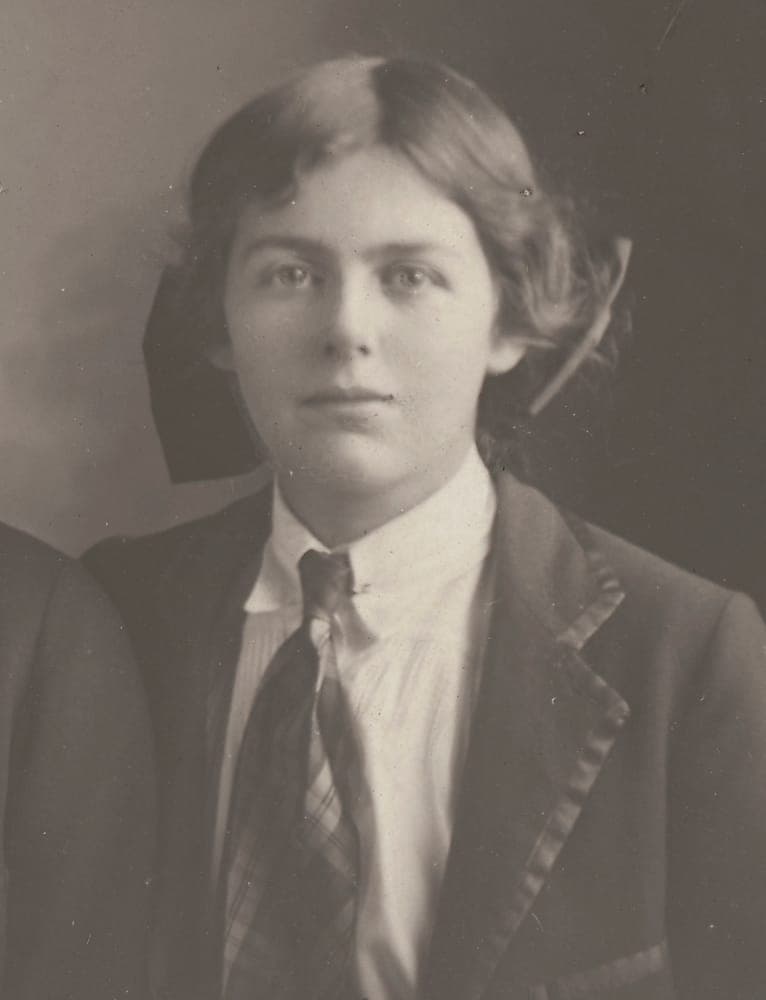
Author
Joan Lindsay
- Lived
- Lived 1896 to 1984
- From
- From Australian
- Born in
- Born in Melbourne, Australia
Born Joan à Beckett Weigall on November 16, 1896, in East St Kilda, Melbourne, to a judge father and a Scottish-born mother descended from a colonial governor, Joan grew up in a comfortable household that expected her to marry well rather than pursue a vocation. She studied painting at the National Gallery of Victoria Art School from 1916, under Bernard Hall and Frederick McCubbin, and there met a fellow student, Daryl Lindsay, whom she eloped with to London and married on Valentine's Day, 1922; Daryl was one of five painting siblings from the Lindsay family of Creswick, alongside his more famous brother, Norman. The couple settled at Mulberry Hill, a farmhouse on Victoria's Mornington Peninsula, where Joan kept her own studio and, through the 1920s and 1930s, wrote occasional journalism and art criticism. She published her first novel, Through Darkest Pondelayo, in 1936 under the pseudonym Serena Livingstone-Stanley, a comic travel parody that sold modestly. Nearly three decades passed before her second book, Time Without Clocks (1962), a memoir of the early years of her marriage. Then, in 1966, she woke from a vivid dream about schoolgirls climbing a rock formation and wrote the resulting novel, Picnic at Hanging Rock, in a matter of weeks; published in 1967 to a muted reception, it became a sensation once reissued by Penguin in 1975, the same year Peter Weir's film adaptation turned it into a landmark of Australian New Wave cinema. Daryl, knighted in 1956 and by then a former director of the National Gallery of Victoria, died on Christmas Day, 1976. Joan remained at Mulberry Hill, helped found the National Trust of Australia, and published a children's book, Syd Sixpence, in 1982. She died of stomach cancer on December 23, 1984, at a hospital in Frankston, aged eighty-eight, and left Mulberry Hill to the National Trust, which preserves it today as a museum of the couple's life and work.
One winter morning in 1966, Joan woke from a dream so vivid she could still feel the hot air and hear girls laughing on a rock she knew well. She went straight to her study, sat on the floor with papers spread around her, and began writing. The novel arrived in a fortnight, dreamed forward chapter by chapter.
The first button needs the app on this device; the second gets it there.
In the canon
- Picnic at Hanging Rock1967