
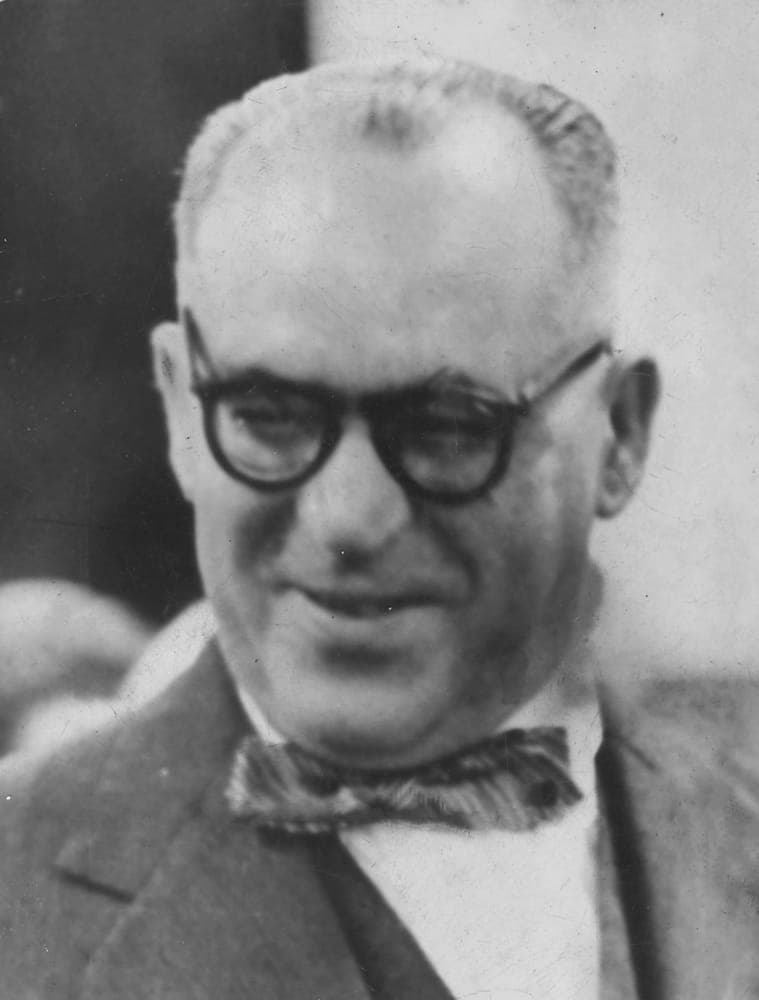
Author
João Guimarães Rosa
- Lived
- Lived 1908 to 1967
- From
- From Brazilian
- Born in
- Born in Cordisburgo, Minas Gerais, Brazil
Born João Guimarães Rosa on June 27, 1908, in the small town of Cordisburgo in the state of Minas Gerais, the first of six children of a shopkeeper father nicknamed seu Fulô, he was a prodigy of languages, beginning French before he was seven and claiming later to read or study some twenty tongues. He moved to his grandparents' house in Belo Horizonte to finish primary school and enrolled at sixteen in the College of Medicine of the Federal University of Minas Gerais. He married Lígia Cabral Penna on his twenty-second birthday in 1930 and began medical practice in the small backlands town of Itaguara, where he had his first contact with the sertão that would become his country. He served as a volunteer doctor during the Constitutionalist Revolution of 1932 and met the future president Juscelino Kubitschek at the front. In 1934 he entered the Brazilian diplomatic service, serving as assistant consul in Hamburg in 1938, where his second wife, Aracy de Carvalho, helped Jews escape the Third Reich and was later named Righteous Among the Nations. He spent decades drafting and redrafting. Sagarana, his first collection, appeared in 1946. Grande Sertão: Veredas, published in 1956, the only novel he ever finished, gave Portuguese a torrent of neologisms and folk grammar to carry the monologue of the bandit Riobaldo across the Minas Gerais backlands, a six-hundred-page sentence often compared to Joyce's Ulysses. Corpo de Baile and Primeiras Estórias followed. Elected to the Brazilian Academy of Letters by unanimous vote in 1963, he postponed his induction for four years; three days after finally taking his chair, he died of a heart attack in Rio de Janeiro on November 19, 1967, aged fifty-nine.
On 16 November 1967, taking the Brazilian Academy of Letters chair he had postponed for four years, Guimarães Rosa closed his induction speech with a line he had first spoken at a friend's funeral decades earlier: people do not die, they become enchanted, one dies only to prove one has lived. Three days later, a heart attack killed him.
The first button needs the app on this device; the second gets it there.