
Author
Johanna Spyri
- Lived
- Lived 1827 to 1901
- From
- From Swiss
- Born in
- Born in Hirzel, Switzerland
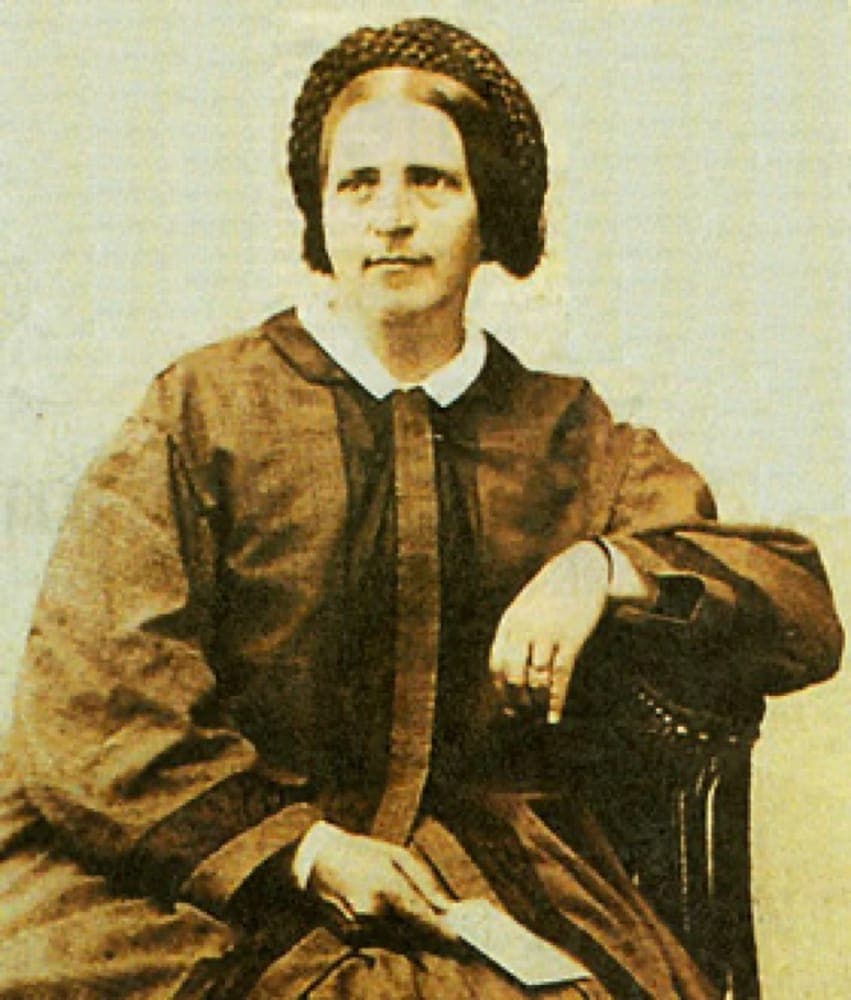
Born Johanna Louise Heusser on June 12, 1827, in the village of Hirzel, in the canton of Zurich, she was the fourth of six children of a country doctor and a mother who wrote hymns and poems. The Alpine landscape above Lake Zurich, with its meadows and high pastures, pressed itself into her early memory and waited there for decades. She received little formal schooling, learned French and Italian, and studied music. In 1852 she married Bernhard Spyri, a lawyer who later became town clerk of Zurich, and moved into the city, where she fell into long spells of homesickness and melancholy. She did not begin publishing until she was past forty. Her first story, Ein Blatt auf Vronys Grab (1871), appeared anonymously to raise money for refugees of the Franco-Prussian War, and she signed her early books only as J. Spyri. Then came the book that carried her name around the world. Heidi, issued in two parts as Heidis Lehr- und Wanderjahre (1880) and Heidi kann brauchen, was es gelernt hat (1881), follows an orphan girl sent to live with her solitary grandfather on the mountain, then taken to the city of Frankfurt, then restored to the Alps she pines for. It became one of the best-selling books ever written in German and has been translated into more than fifty languages. She wrote roughly fifty further stories for children and adults, among them Heimatlos (1878) and Gritlis Kinder (1883). In 1884 her husband and her only child, Bernhard Diethelm, both died, and she turned the remaining years toward charity and steady work. She died of cancer on July 7, 1901, in Zurich, less than a month after her seventy-fourth birthday.
She was past forty and had published nothing when Cornelius Rudolph Vietor, chief pastor of the Liebfrauenkirche in Bremen and a regular visitor to Zurich, urged her to write. At his request her first story, Ein Blatt auf Vrony's Grab, was printed in Bremen in 1871 under the bare initials J.S. It sold well, and she kept writing.
The first button needs the app on this device; the second gets it there.
In the canon
- Heidi1881