
Author
John Hersey
- Lived
- Lived 1914 to 1993
- From
- From American
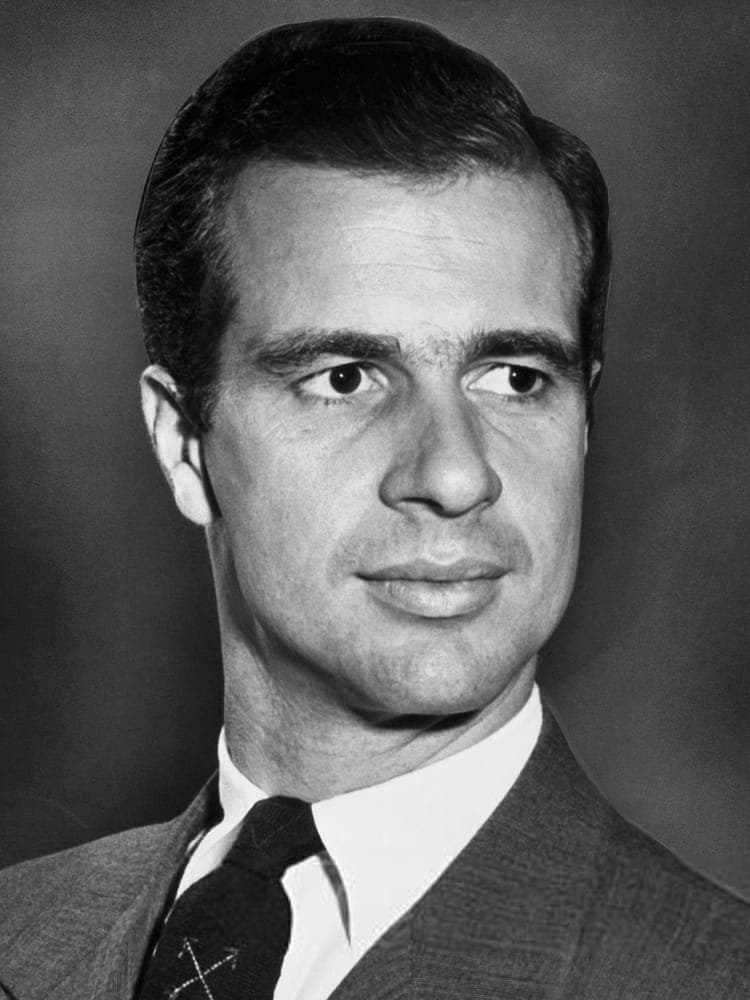
Born on June 17, 1914, in Tianjin, China, to Protestant missionaries Roscoe and Grace Hersey, John Richard Hersey learned to speak Chinese before he spoke English. The family returned to the United States when he was ten, settling in Briarcliff Manor, New York, where he became his Boy Scout troop's first Eagle Scout. He went on to Hotchkiss and Yale, lettering in football, edited the Yale Daily News, joined Skull and Bones, and won a Mellon Fellowship to Clare College, Cambridge. The summer of 1937 he spent as Sinclair Lewis's private secretary and driver, an experience he chafed at, and that autumn began at Time after writing an essay attacking the magazine's quality. He covered the Pacific war for Time and Life, survived four plane crashes, and was commended by the Secretary of the Navy for evacuating wounded marines at Guadalcanal. His first novel, A Bell for Adano, set in occupied Sicily, won the 1945 Pulitzer Prize for Fiction. In the winter of 1945, reporting from devastated Japan for The New Yorker, he found a document by a Jesuit priest who had survived the atomic bomb, and through him met five other survivors. The result was Hiroshima, his 31,000-word account that ran as the entire August 31, 1946 issue, a thing The New Yorker had never done before or done since. In 1999 a panel at New York University named it the finest work of American journalism of the twentieth century. He went on to write The Wall and many other books, and for twenty years taught writing at Yale, where he served as master of Pierson College. He died on March 24, 1993, at his home on Martha's Vineyard, at the age of seventy-eight.
The first button needs the app on this device; the second gets it there.
In the canon
- Hiroshima1946