
Author
John Jay
- Lived
- Lived 1745 to 1829
- From
- From American
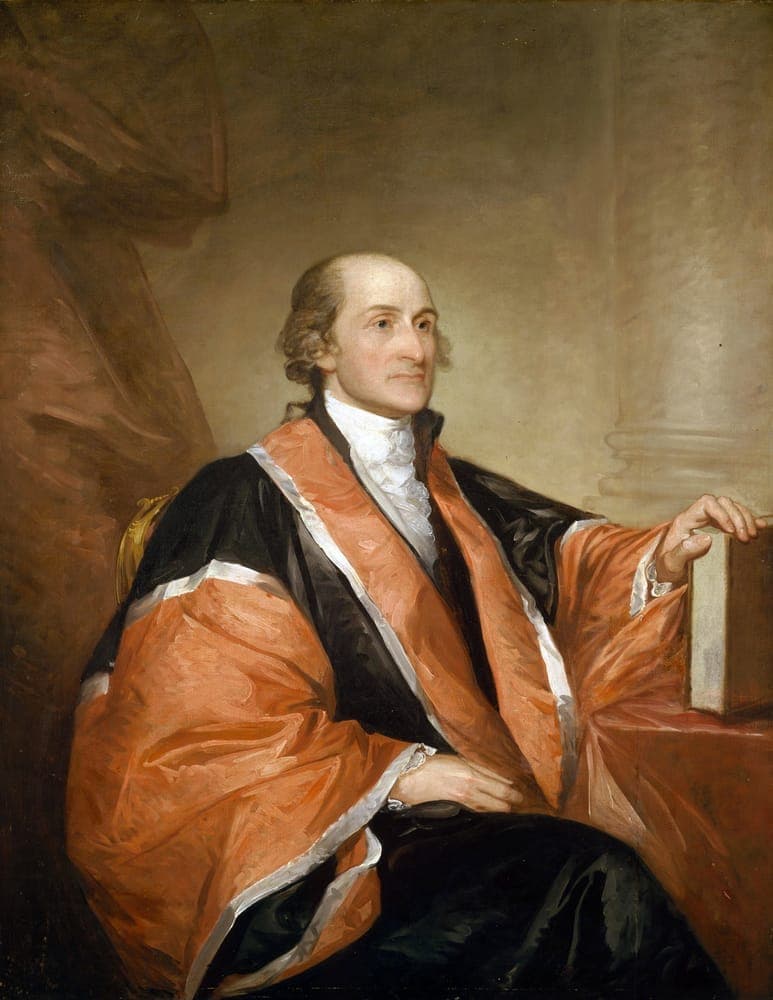
Born on December 23, 1745, in New York City to Peter Jay, a wealthy merchant in furs, wheat, and timber, and Mary Van Cortlandt, of old Dutch stock, John Jay was the eighth of ten children. His paternal grandfather Auguste Jay had come to New York from La Rochelle after the revocation of the Edict of Nantes. The family moved up the Hudson to Rye when a smallpox epidemic blinded two of John's siblings. He was tutored at home and by an Anglican priest in New Rochelle, entered King's College, the future Columbia, at fourteen, and on graduation in 1764 read law with Benjamin Kissam in New York. Admitted to the bar in 1768, he joined the New York Committee of Correspondence in 1774, attended the First and Second Continental Congresses, and was elected its President in 1778. From 1779 to 1782 he was American minister in Madrid and persuaded the Spanish crown to send financial aid to the rebel colonies. He negotiated the Treaty of Paris in 1783 with Franklin and Adams, signed it, and returned home to find himself the Confederation's Secretary of Foreign Affairs. In 1787 and 1788 he wrote five of the eighty-five Federalist Papers under the name Publius, a number reduced by an illness that interrupted his contribution. Washington named him in 1789 the first Chief Justice of the United States. The 1794 Jay Treaty with Britain that bears his name averted a second war but was so unpopular that he saw himself burned in effigy from town to town. He served as Governor of New York from 1795 to 1801, passed gradual emancipation in 1799, and retired to his farm at Bedford in Westchester County, where he died on May 17, 1829, at eighty-three.
The first button needs the app on this device; the second gets it there.