
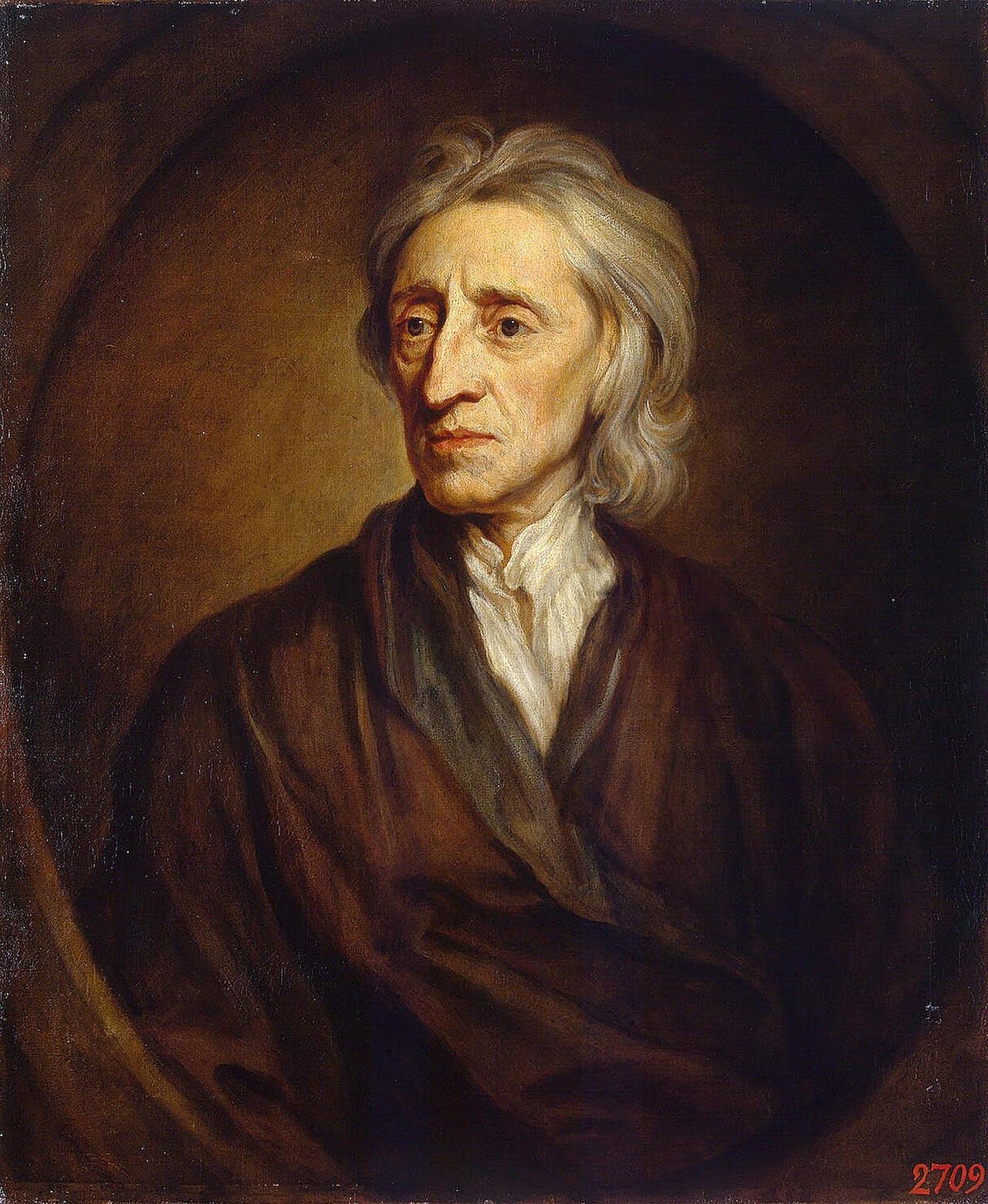
Author
John Locke
- Lived
- Lived 1632 to 1704
- From
- From English
- Born in
- Born in Wrington, Somerset, England
Born on August 29, 1632, in Wrington, Somerset, the son of a Puritan attorney who fought briefly for the Parliamentary cause in the English Civil War, Locke was educated at Westminster School and Christ Church, Oxford, where he studied medicine and natural philosophy. He became physician and adviser to Anthony Ashley Cooper, later the first Earl of Shaftesbury, and through that association was drawn into the radical Whig politics that would shape his life's work. When Shaftesbury fell from power and fled to Holland, Locke followed, spending five years in exile during which he composed the works that would remake Western thought. An Essay Concerning Human Understanding (1689) argued that the mind begins as a blank slate, demolishing the doctrine of innate ideas and laying the groundwork for empiricism. Two Treatises of Government (1689), published anonymously, dismantled the divine right of kings and grounded political authority in the consent of the governed, the protection of natural rights to life, liberty, and property, and the right of revolution when government fails its people. A Letter Concerning Toleration (1689) made the case for religious freedom. He returned to England after the Glorious Revolution of 1688 and spent his remaining years at Oates in Essex, the country house of Sir Francis and Lady Masham. He died on October 28, 1704. His political philosophy became the intellectual foundation of the American Revolution and remains embedded in every liberal constitution on earth.
In 1668, Locke's patron Anthony Ashley Cooper lay dying from an abscessed liver cyst that older physicians refused to touch. Locke, trained in medicine at Oxford, urged surgery: a tube pushed through the abdomen to drain the infection. Cooper survived, replaced the tube with one of gold, and wore it for the rest of his life.
Oh, the depth of the riches of the goodness and knowledge of God! Cease now.
The first button needs the app on this device; the second gets it there.
In the canon
- Two Treatises of Government1689
- An Essay Concerning Human Understanding1689
- A Letter Concerning Toleration1689
- Some Thoughts Concerning Education1693