
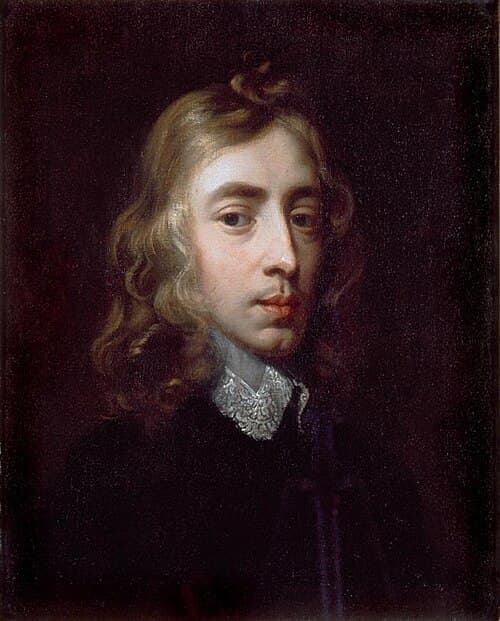
Author
John Milton
- Lived
- Lived 1608 to 1674
- From
- From English
- Born in
- Born in London, England
Born on 9 December 1608 in Bread Street, London , the same street where John Donne had been born thirty-six years earlier , John Milton was the son of a prosperous scrivener and composer who ensured his son received an extraordinary education. He attended St Paul’s School and then Christ’s College, Cambridge, where fellow students nicknamed him “the Lady of Christ’s” for his fair complexion and moral seriousness. After Cambridge, he spent six years in private study at his father’s estate in Horton, reading virtually everything written in Latin, Greek, Italian, Hebrew, and English. A grand tour of Italy in 1638–1639 brought him into conversation with Galileo, then under house arrest , an encounter Milton later recalled in Areopagitica (1644), his thundering defense of freedom of the press, which remains one of the most powerful arguments against censorship ever written. He served as Secretary for Foreign Tongues under Oliver Cromwell’s Commonwealth, composing state correspondence in Latin while his eyesight deteriorated. By 1652, he was completely blind. After the Restoration of Charles II in 1660, Milton was briefly imprisoned and narrowly escaped execution for his republican writings. It was in blindness, political disgrace, and relative poverty that he dictated Paradise Lost (1667) to his daughters and a series of amanuenses , twelve books of blank verse reimagining the Fall of Man with a Satan so charismatic that Blake later declared Milton “of the Devil’s party without knowing it.” Paradise Regained and Samson Agonistes followed in 1671. He died quietly on 8 November 1674 in Chalfont St Giles, of kidney failure, and was buried in St Giles-without-Cripplegate.
When the monarchy returned in 1660, the public hangman burned Milton's republican books, and the blind poet went into hiding to escape the gallows. Arrested that autumn and briefly imprisoned, he was saved in part by Andrew Marvell, once his assistant, who argued for his release in Parliament.
The first button needs the app on this device; the second gets it there.
In the canon
- Comus1634
- Lycidas1638
- Areopagitica1644
- Paradise Lost1667
- Paradise Regained1671
- Samson Agonistes1671