
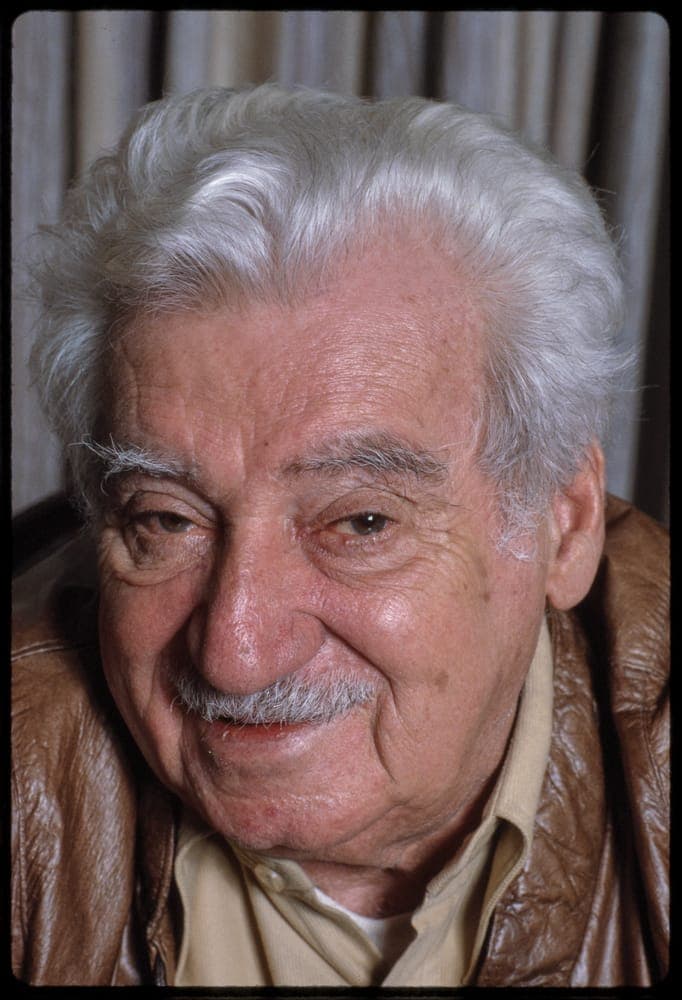
Author
Jorge Amado
- Lived
- Lived 1912 to 2001
- From
- From Brazilian
- Born in
- Born in Ferradas, Brazil
Born Jorge Leal Amado de Faria on August 10, 1912, on his father's cacao farm near Ferradas, in the frontier region of Ilhéus, Bahia, he moved with his family to the town itself before he turned two, after a smallpox outbreak swept the countryside. His father, João Amado de Faria, was a planter in the lawless cacao boom later immortalized in his fiction; his mother was Eulália Leal. Educated at a Jesuit college in Salvador and then at the law school of the Federal University of Rio de Janeiro, he never practiced law, publishing his first novel, O País do Carnaval, in 1931 at eighteen. Cacau (1933), Jubiabá (1935), and Terras do Sem Fim (1943) followed, early novels that turned the exploitation of migrant laborers on the cacao plantations into folk epic and won him a following on the Brazilian left. A member of the Communist Party, he was arrested in 1935 and again in 1936; in November 1937, while he was in custody, soldiers of Getúlio Vargas's new dictatorship burned nearly two thousand of his books, most of them fresh copies of Capitães da Areia, in a public square in Salvador. He married the writer Zélia Gattai in 1945, the year his first marriage, to Matilde Garcia Rosa, ended, and was elected federal deputy for São Paulo the same year. When the Communist Party was outlawed in 1947, he went into exile, first in France, then, after his expulsion in 1950, in Czechoslovakia, where his daughter Paloma was born. Back in Brazil by the mid-1950s, he turned from political urgency toward the sensual, comic portraits of Bahian life that made his name: Gabriela, Clove and Cinnamon (1958), Dona Flor and Her Two Husbands (1966), and Tent of Miracles (1969). Elected to the Brazilian Academy of Letters in 1961, nominated for the Nobel Prize seven times, and translated into some forty-nine languages, he became Brazil's most widely read novelist abroad. He died of heart and lung failure in Salvador on August 6, 2001, four days short of his eighty-ninth birthday.
On November 19, 1937, soldiers piled nearly seventeen hundred of his books in a square outside Salvador's naval academy and burned them, most of them fresh copies of Captains of the Sand. Amado learned of the bonfire from his cell. He was already imprisoned again, arrested months earlier by the same dictatorship that lit the match.
The first button needs the app on this device; the second gets it there.
In the canon
- Gabriela, Clove and Cinnamon1958
- Tent of Miracles1969