
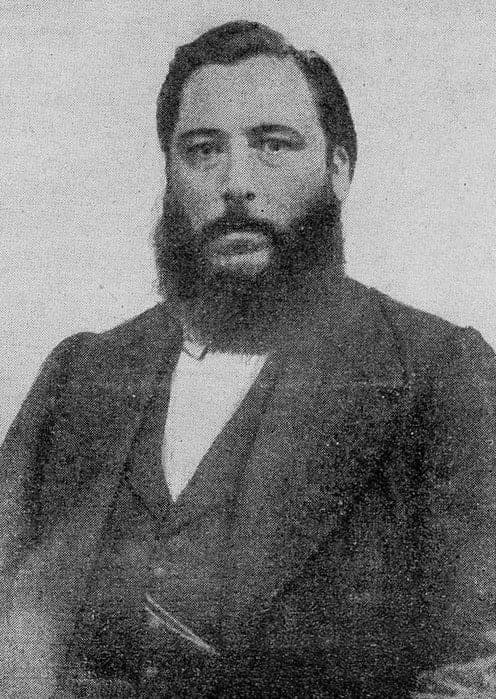
Author
José Hernández
- Lived
- Lived 1834 to 1886
- From
- From Argentine
- Born in
- Born in San Martín, Buenos Aires Province, Argentina
Born José Rafael Hernández y Pueyrredón on November 10, 1834, on a ranch near San Martín in Buenos Aires Province, José Hernández was the son of Rafael Hernández, foreman of several cattle estates, and Isabel Pueyrredón, related to a family that had once led the country. His mother died in 1843, when he was nine, and doctors around the same time declared him asthmatic; his father sent him from the city to the family's rural holdings at Camarones and Laguna de los Padres, where he learned to ride, work cattle, and live among gauchos. He enlisted in the Buenos Aires militias in 1853 and fought on the Federalist side at El Tala, Cepeda, and Pavón over the following decade, then taught himself stenography to record debates in the Confederation's Congress. He turned to journalism, publishing a defense of the assassinated caudillo Ángel Vicente Peñaloza, Vida del Chacho, in 1863, the same year he married Carolina González del Solar in Paraná; the couple went on to have eight children. In 1869 he founded the newspaper El Río de la Plata, attacking President Domingo Sarmiento's centralizing government and defending gauchos and the Indigenous frontier against forced conscription. When the Federalist uprising he had joined was crushed at Ñaembé in 1871, Hernández fled into exile in Brazil and Uruguay. He returned to Buenos Aires the next year and published El Gaucho Martín Fierro (1872), a narrative poem in the gaucho's own voice that sold tens of thousands of cheap pamphlet copies to rural readers within two years. Its 1879 sequel, La Vuelta de Martín Fierro, appeared after Hernández had entered Congress as a national deputy, and reconciled its once-hunted hero to the law. He went on to serve as a provincial senator for Buenos Aires, reelected in 1885, and died of heart disease at his home in Belgrano on October 21, 1886, at fifty-one.
Wanted for his part in a failed Federalist uprising, Hernández hid in room seven of Buenos Aires's Hotel Argentino, afraid to be seen in the street. In under ten days that summer, he wrote nearly all of El Gaucho Martín Fierro, later telling a friend the poem alone had made the hotel's tedium bearable.
The first button needs the app on this device; the second gets it there.
In the canon
- Martín Fierro1872