
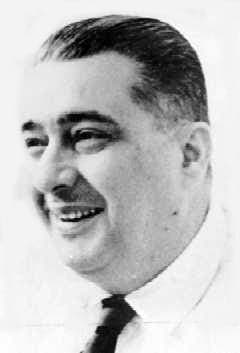
Author
José Lezama Lima
- Lived
- Lived 1910 to 1976
- From
- From Cuban
- Born in
- Born in Havana, Cuba
Born José María Andrés Fernando Lezama Lima on December 19, 1910, at the Columbia military encampment in Marianao, greater Havana, he was the son of an army colonel, José María Lezama y Rodda, and Rosa Lima Rosado. His father volunteered for service during the First World War and died of influenza in Pensacola, Florida, in January 1919, when Lezama was eight, plunging the family into financial hardship and marking him for life. Chronic asthma confined him to bed for long stretches as a boy, and he read his way through the enclosure, laying the ground for the dense, allusive prose that would become his signature. He studied law at the University of Havana, earning his doctorate in 1938 after the university's repeated closures during years of political unrest, then worked only briefly at a law office before turning to cultural and government posts. His long poem 'Muerte de Narciso' (1937) announced him as a major new voice, and in 1944 he co-founded, with José Rodríguez Feo, the magazine Orígenes, which for twelve years made his house on Trocadero Street, in Havana, the center of Cuban literary life. After the 1959 Revolution he was appointed director of the Department of Literature and Publications at the new National Council of Culture. In September 1964 his dying mother urged him to finally marry, and within weeks he wed his old friend María Luisa Bautista. Two years later he published his sole novel, Paradiso (1966), a sprawling, autobiographical, sexually frank account of a boy's coming of age in Havana, which the government briefly suspended from bookstores over its homoerotic content before Julio Cortázar's public defense helped restore its standing abroad. In 1971 Lezama was implicated in the fallout of the Padilla affair, after backing a censored poet's prize; his books were pulled from Cuban shelves and he grew increasingly isolated, permitted almost no travel outside Cuba for the rest of his life. He died in a Havana hospital on August 9, 1976, of bronchopneumonia following a urinary infection, at the age of sixty-five, and was buried at Colón Cemetery.
In September 1964, as his mother Rosa lay dying, she urged her fifty-three-year-old son to finally marry. Within weeks he wed his longtime friend, María Luisa Bautista, in the same Havana house, at Trocadero 162, where he had already lived half his life and would remain until his own death twelve years later.
When they thought I had descended to the mansion of Hades, I find myself in Guanabacoa, dancing a rumba.
The first button needs the app on this device; the second gets it there.
In the canon
- Paradiso1966