
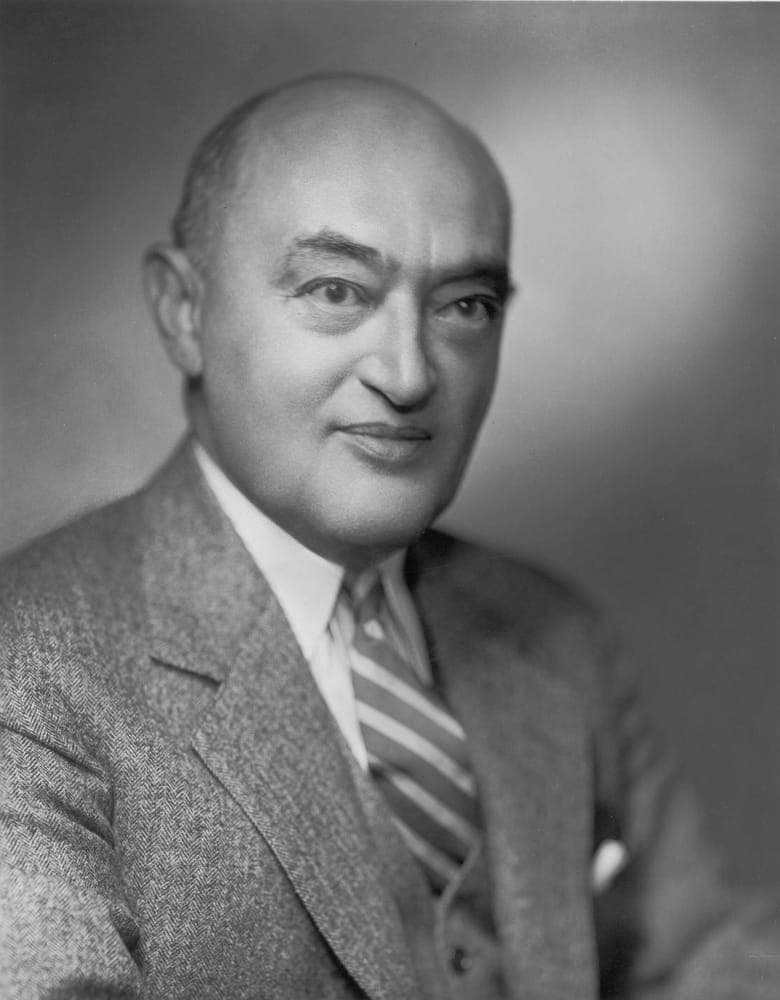
Author
Joseph A. Schumpeter
- Lived
- Lived 1883 to 1950
- From
- From Austrian-American
- Born in
- Born in Triesch, Moravia, Austria-Hungary
Born Joseph Alois Schumpeter on February 8, 1883, in Triesch, Moravia, then part of Austria-Hungary, he lost his father, a factory owner, when he was four years old. His mother remarried a much older retired lieutenant field marshal, Sigismund von Kéler, whose social standing opened the doors of the Theresianum, an elite Vienna gymnasium where the boy grew fluent in six languages. He studied law at the University of Vienna, sitting in the graduate seminar of Eugen von Böhm-Bawerk alongside future Austro-Marxists and the free-market economist Ludwig von Mises, and took his doctorate in 1906. His first academic post, at Czernowitz in 1909, nearly ended in a duel with the university librarian over student access to books; Schumpeter, an accomplished swordsman, nicked the man's shoulder in a short bout, and the two later became friends. The Theory of Economic Development (1911) introduced his lasting preoccupation with the entrepreneur as the engine of economic change. In 1919 he served seven turbulent months as Austria's Minister of Finance before resigning, and in 1921 took the presidency of the Biedermann Bank, which collapsed in the 1924 financial crisis and left him deeply in debt. In the summer of 1926 his mother died in June and his second wife, Anna, in childbirth that August, along with their infant son. He emigrated to the United States in 1932 to join the Harvard faculty, married the economist Elizabeth Boody in 1937, and became a citizen in 1939. Business Cycles (1939) and Capitalism, Socialism, and Democracy (1942), which gave the world the phrase creative destruction, secured his reputation as one of the century's most original economists. He died of a cerebral hemorrhage in his sleep at his country home in Taconic, Connecticut, on January 8, 1950, at the age of sixty-six, leaving his last great work, History of Economic Analysis, to be assembled and published posthumously by his widow.
In 1909, Schumpeter's first teaching post, at Czernowitz, nearly ended before it began. When the university librarian refused his students free access to books, the twenty-six-year-old economist challenged him to a duel. Schumpeter, an expert swordsman, nicked his opponent's shoulder in a short bout. The two men became friends soon after.
The first button needs the app on this device; the second gets it there.
In the canon
- Capitalism, Socialism, and Democracy1942