
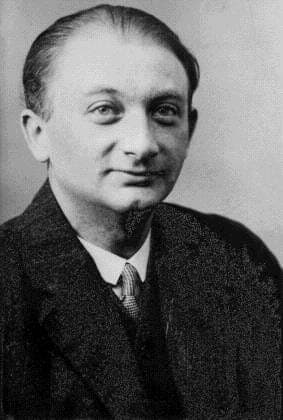
Author
Joseph Roth
- Lived
- Lived 1894 to 1939
- From
- From Austrian
- Born in
- Born in Brody, Austria-Hungary
Born Moses Joseph Roth on September 2, 1894, in Brody, a small town in East Galicia on the eastern edge of the Austro-Hungarian Empire, he grew up among the Yiddish-speaking Jews of the shtetl, raised by his mother and her relatives; his father had vanished into mental illness before he was born and he never met him. He studied philosophy and German literature at Lemberg and then Vienna, broke off his degree in 1916 to volunteer for the Austro-Hungarian army on the Eastern Front, and never quite recovered from the collapse of the Habsburg world in 1918. From 1923 he was the star feuilletonist of the liberal Frankfurter Zeitung, paid the dream rate of one Deutschmark per line, sending dispatches from the Soviet Union, Albania, Italy, and the south of France. His wife Friedl succumbed to schizophrenia in the late 1920s and was later murdered in the Nazis' Aktion T4 programme. Job (1930) is his Jewish parable of a poor teacher in Galicia whose suffering tests every consolation; The Radetzky March (1932) follows three generations of the Trotta family from Solferino to the funeral of Franz Joseph, the most enduring elegy ever written for the Dual Monarchy. On the day Hitler became Chancellor in January 1933, Roth boarded a train for Paris and never returned to Germany. He drifted between cheap hotels in the Latin Quarter, drinking himself blind on calvados while filing newspaper columns for the emigre press. He died on May 27, 1939, at the Hospital Necker in Paris, at the age of forty-four, of double pneumonia after a delirium tremens collapse on hearing that his friend Ernst Toller had hanged himself in New York.
Throughout his life Roth invented a grander war record than his own: a decorated cavalry lieutenant, a Russian prisoner of war who escaped and fought two months with the Red Army before straggling home. In truth he spent much of the war in a Galician shtetl, censoring the mail.
The first button needs the app on this device; the second gets it there.
In the canon
- Job1930
- The Radetzky March1932
- Weights And Measures1937