
Author
Juan Rulfo
- Lived
- Lived 1917 to 1986
- From
- From Mexican
- Born in
- Born in Sayula, Jalisco, Mexico
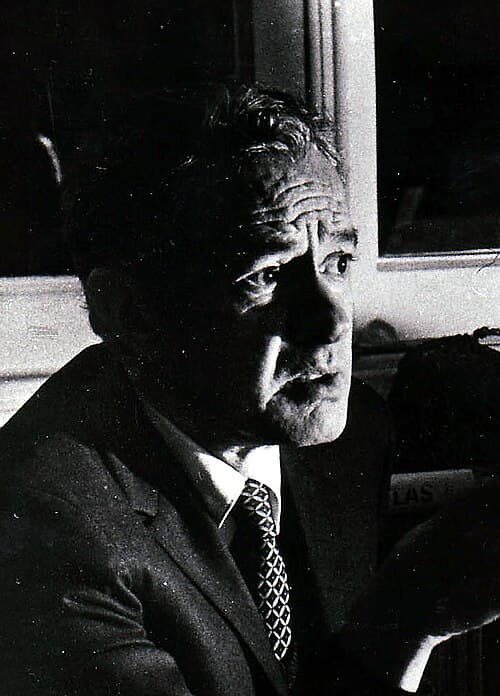
Born on 16 May 1917 in Apulco, Jalisco, Mexico , though registered in the nearby town of Sayula , Juan Nepomuceno Carlos Pérez Rulfo Vizcaíno grew up in a world shattered by revolution and religious war. His father was shot and killed in 1923, during the upheaval following the Mexican Revolution; his mother died in 1927, when he was ten. The extended family, once landowners whose fortunes were ruined by the Revolution and the Cristero War of 1926–1928, sent him to an orphanage school in Guadalajara, where he lived from 1928 to 1932. He moved to Mexico City, briefly entered the National Military Academy, left after three months, and eventually audited literature courses at the Universidad Nacional Autónoma de México while working as an immigration file clerk. He worked for the Goodrich-Euzkadi tire company as a traveling salesman across southern Mexico until he was fired in 1952 for asking for a radio for his car. A Rockefeller-funded fellowship at the Centro Mexicano de Escritores freed him to write. The result was two books , only two, but they changed Latin American literature. El Llano en llamas (The Burning Plain, 1953) gathered seventeen stories of rural Mexico into a landscape of dust, violence, and laconic despair. Pedro Páramo (1955) , a short novel in which a son travels to his dead mother’s village and discovers that everyone there, including eventually himself, is a ghost , initially sold only two thousand copies in four years. Gabriel García Márquez later said he could recite it by heart and that it gave him the road to follow for One Hundred Years of Solitude. Rulfo published almost nothing afterward, spending his remaining decades as an editor at the Instituto Nacional Indigenista and as a distinguished photographer. He died on 7 January 1986 in Mexico City.
When the Cristero War set the Mexican government against the Catholic Church, the parish priest of San Gabriel entrusted his entire library to Rulfo's grandmother, in whose house the boy was living. Rulfo, not yet ten and already fatherless, read his way through every volume it held.
The first button needs the app on this device; the second gets it there.
In the canon
- Tell Them Not to Kill Me!1953
- Pedro Páramo1955