
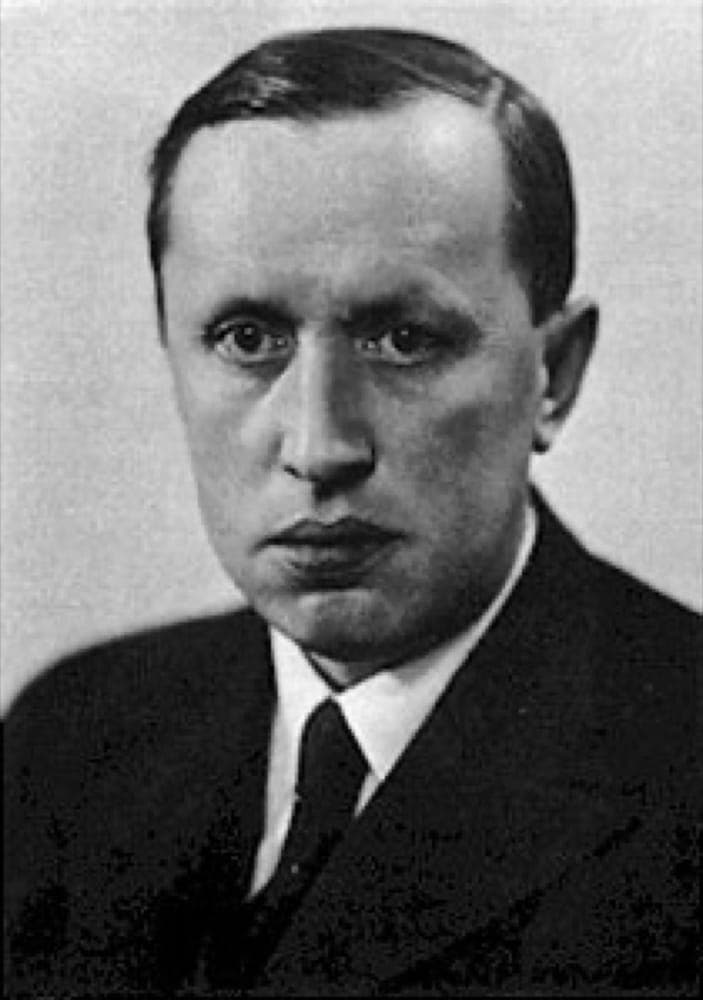
Author
Karel Čapek
- Lived
- Lived 1890 to 1938
- From
- From Czech
- Born in
- Born in Malé Svatoňovice, Czech Republic
Born on January 9, 1890, in the spa village of Malé Svatoňovice in northeastern Bohemia, then part of Austria-Hungary, Karel Čapek was the youngest child of a country doctor. A spinal condition kept him from military service and shadowed his health for the whole of his life. He studied philosophy in Prague, Berlin, and Paris, took a doctorate at Charles University in 1915, and settled into journalism at the liberal daily Lidové noviny, where he wrote for the rest of his life. With his painter brother Josef he formed one of the great literary partnerships, and it was Josef who supplied the word that made him famous. For his play R.U.R. (1920), about manufactured workers who rise against their makers, Karel wanted to call them labori; Josef proposed robot, from the Czech robota, meaning forced labor. The play was translated into thirty languages within two years. The Czech name for newt, mlok, never traveled as far, but War with the Newts (1936), a satirical novel of a servile amphibian species exploited and then triumphant, stands among the sharpest warnings written against fascism. He wrote prolifically across forms: the comedy The Insect Play (1921) with Josef, the science fiction of Krakatit (1924), the philosophical trilogy Hordubal (1933), Meteor (1934), and An Ordinary Life (1934), and warm books of travel and gardening. A close friend of President Masaryk, he recorded their conversations in Talks with T. G. Masaryk. He died of pneumonia in Prague on December 25, 1938, at forty-eight, three months after Munich. The Gestapo, not knowing he was dead, came to arrest him the following spring.
On 3 July 1924, the London PEN Club held a luncheon in Čapek's honor, the young Czech dramatist freshly known abroad for R.U.R. There he met John Galsworthy and G.K. Chesterton. The friendship with Chesterton held for twelve years, ending only with Chesterton's death in 1936.
The first button needs the app on this device; the second gets it there.
In the canon
- R.U.R.1920
- War with the Newts1936
- The White Disease1937