
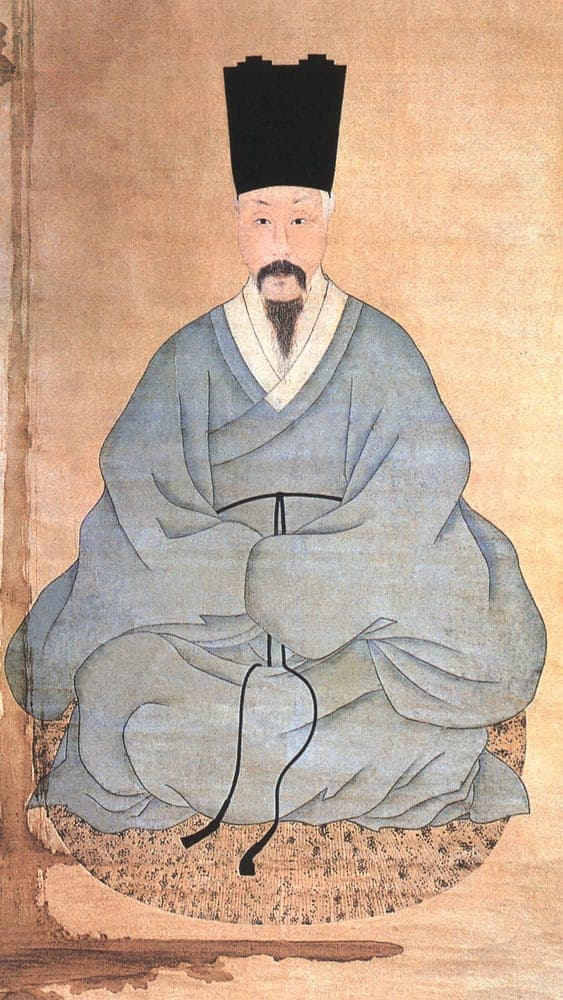
Author
Kim Man-jung
- Lived
- Lived 1637 to 1692
- From
- From Korean
Kim Man-jung was born on 6 March 1637, three weeks after his father, Kim Ik-gyeom, died at Ganghwa Island rather than surrender it to the invading Qing army. Raised by his widowed mother, Lady Yun, alongside his older brother Kim Man-gi, he showed early promise and placed first in the state civil service examination in 1665, launching a rapid rise through the Joseon bureaucracy under King Sukjong. He served in the Censorate and the Ministry of Rites and eventually reached ministerial rank, but his career was repeatedly upended by the factional rivalries of the court. Exiled in 1674 for opposing the dominant Southerner faction, he was reinstated in 1679 when the Westerners returned to power, only to be exiled again in 1687, this time to the remote border town of Seoncheon. There, to console his mother, he wrote Kuunmong (The Nine Cloud Dream), a Buddhist dream-vision novel about a monk who lives an entire worldly life in a single night's sleep and wakes to find the two indistinguishable. In 1689 the political tide turned again: Sukjong deposed Queen Inhyeon in favor of his concubine Jang Hui-bin, and Kim, identified with the queen's faction, was banished a final time, to the southern island of Namhae. His mother died in the capital that same year, and news of it did not reach him for months. He remained on Namhae, reportedly completing a second novel, Sassi Namjeonggi, before his own death there in 1692, at 55, his sentence never lifted. Kim is remembered today as a pioneering champion of vernacular Korean writing, and Kuunmong has been read continuously since, translated into English and several other languages, as one of Korea's foundational literary classics.
In January 1690, at his exile post on Namhae, Kim received word that his mother had died in the capital months before, the news delayed by his banishment. He cried out, collapsed from the veranda where he sat, and did not rise again for a long while.
The first button needs the app on this device; the second gets it there.
In the canon
- The Nine Cloud Dream1687