
Author
Kōbō Abe
- Lived
- Lived 1924 to 1993
- From
- From Japanese
- Born in
- Born in Tokyo, Japan
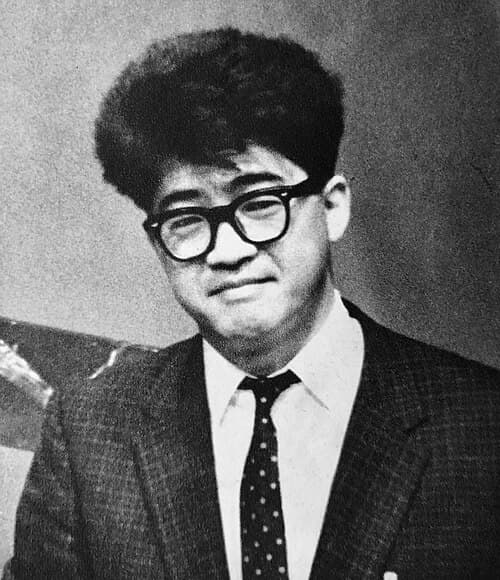
Born Kimifusa Abe on 7 March 1924 in Kita, Tokyo, Kōbō Abe grew up in Mukden (now Shenyang) in Japanese-occupied Manchuria, where his father practiced medicine. This displacement , born in Tokyo, raised in a colonial territory, his mother from Hokkaido , left him, as he later told an interviewer, “essentially a man without a hometown,” and the condition of radical homelessness became the central subject of his fiction. As a child he collected insects, read Dostoevsky and Poe, and developed a fascination with mathematics. He entered Tokyo Imperial University to study medicine in 1943 , partly from filial duty, partly because medical students were exempt from military conscription. He returned to Manchuria near the end of the war; that winter, his father died of typhus. Abe went back to Tokyo with his father’s ashes, completed his medical degree in 1948, and never practiced, joking that he graduated “on the condition that I would not.” He married the artist Machi Yamada in 1945, and the couple lived in a bombed-out barracks, selling charcoal and pickles to survive. He joined the Japanese Communist Party but grew disillusioned, especially after the Soviet invasion of Hungary in 1956, and was expelled in 1962. The Woman in the Dunes (1962) , in which an entomologist is trapped in a sandpit with a woman who must endlessly shovel sand to prevent her house from being buried , established him internationally and was adapted into an award-winning film by Hiroshi Teshigahara in 1964. The Face of Another (1964), The Ruined Map (1967), and The Box Man (1973) continued his exploration of identity, alienation, and the absurd, drawing inevitable comparisons to Kafka. He founded the Kōbō Abe Studio theater company in 1973. He died of heart failure in Tokyo on 22 January 1993, at sixty-eight.
As a boy in Japanese-occupied Manchuria, Abe watched a marsh outside Mukden serve as both execution ground and rubbish dump, its surface lifting each dusk under thousands of scavenging crows. Condemned men's heads would surface from the dark and vanish again. He carried the memory for the rest of his life.
The first button needs the app on this device; the second gets it there.
In the canon
- The Woman in the Dunes1962
- The Ruined Map1967
- Secret Rendezvous1977