
Author
La Rochefoucauld
- Lived
- Lived 1613 to 1680
- From
- From French
- Born in
- Born in Paris, France
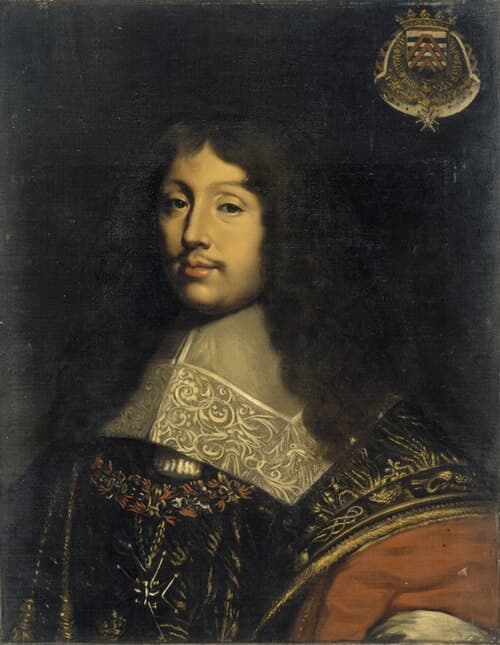
Born on 15 September 1613 at the Rue des Petits Champs in the first arrondissement of Paris, François de La Rochefoucauld, Prince de Marcillac and later second Duke of La Rochefoucauld, entered a world of aristocratic intrigue from which he never fully extricated himself. His great-grandfather had been murdered in the St. Bartholomew’s Day Massacre of 1572 as a Huguenot; the family had since converted to Catholicism. Married at fourteen to Andrée de Vivonne in an arranged union, he was a colonel commanding a regiment by sixteen. He threw himself into the political conspiracies of the era, allying with Madame de Chevreuse and then Queen Anne of Austria against Cardinal Richelieu, which earned him a week in the Bastille and repeated banishments to his country estates. His liaison with the Duchesse de Longueville drew him into the Fronde, the aristocratic rebellion against the crown during the minority of Louis XIV. He fought conspicuously in the siege of Paris in 1649, was shot through the head at the battle of the Faubourg Saint-Antoine in 1652, and nearly lost his sight. Years of convalescence on his estate at Verteuil followed. When he returned to Paris in the early 1660s, the age of aristocratic revolt was over, and La Rochefoucauld remade himself as a man of letters. He took his place in the salon of the Marquise de Sablé, where the literary game was the crafting of sentences and maxims. His Maximes, first published anonymously in 1665, stripped human virtue to its skeleton and found self-interest in every bone , “We all have strength enough to bear the misfortunes of others”; “Hypocrisy is the homage that vice pays to virtue.” His close friendship with Madame de La Fayette, author of La Princesse de Clèves, sustained his final years. He died in Paris on 17 March 1680, having outlived his illusions about nearly everything except the value of clear prose.
In 1662 an Amsterdam publisher printed his memoirs without permission, its pages painting unflattering portraits of the Duchesse de Longueville and Cardinal de Retz, his old allies from the Fronde. Paris, only recently willing to receive him again, shunned him as a turncoat. He denied writing it for the rest of his life; few believed him.
The first button needs the app on this device; the second gets it there.
In the canon
- Maxims1665