
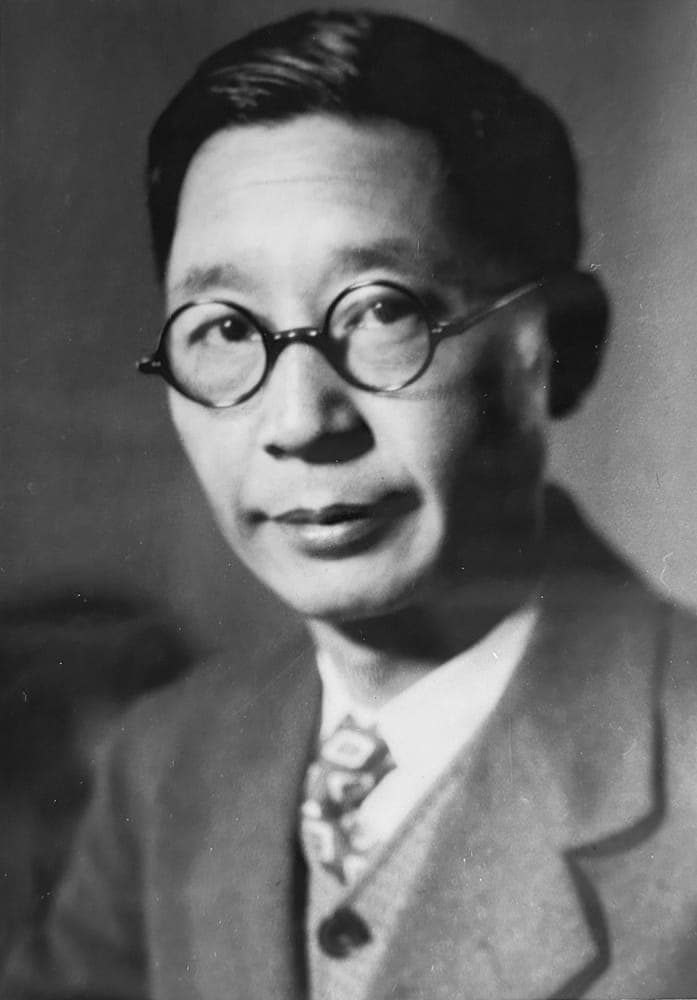
Author
Lao She
- Lived
- Lived 1899 to 1966
- From
- From Chinese
- Born in
- Born in Beijing, China
Born Shu Qingchun on February 3, 1899, in Beijing, into a poor Manchu family of the Plain Red Banner, Lao She lost his father before he was two: a palace guard, he was killed in 1901 defending the city against the armies of the Eight-Nation Alliance during the Boxer Rebellion, leaving his mother to raise the children alone by taking in washing. A scholarship for the destitute carried him through Beijing Normal University, from which he graduated in 1918, and he was teaching school through the ferment of the May Fourth Movement when a Christian missionary he had befriended recommended him for a lectureship in Chinese at London's School of Oriental Studies. Alone in Notting Hill from 1924 to 1929, he read Charles Dickens with something close to devotion and, modeling his own book on Nicholas Nickleby, wrote The Philosophy of Lao Zhang under the new pen name Lao She, meaning old shelter. Back in China he taught at Qilu and Shandong universities, married the painter Hu Jieqing in 1931, and in 1936 published Camel Xiangzi, known to English readers as Rickshaw Boy, the story of a rickshaw puller ground down by a corrupt city, which made him one of the country's most widely read novelists. When Japan's invasion reached Beijing, he moved to Wuhan and then wartime Chongqing to lead the All-China Resistance Association of Writers and Artists, rallying the nation's writers against the occupation. A 1946 lecture tour brought him to the United States, where his friend Pearl Buck urged him to remain, but he sailed home in December 1949, months after the Communist victory, and in 1951 became the first writer ever named a People's Artist by the Beijing municipal government. His 1957 play Teahouse, following one Beijing establishment and its regulars across five decades of upheaval, became a fixture of the Chinese stage. In August 1966, Red Guards seized him as a counterrevolutionary, paraded him through the streets, and beat him at the gate of the Confucius Temple; his body was found the next morning floating in Beijing's Taiping Lake, at sixty-seven.
In London, isolated by loneliness and the racial prejudice of 1920s Notting Hill, Lao She shared lodgings with a fellow Chinese writer, Xu Dishan, and began telling him stories of old Beijing in the evenings after teaching all day. Xu urged him to write the stories down. The pages became his first novel.
The first button needs the app on this device; the second gets it there.
In the canon
- Cat Country1932
- Rickshaw Boy1936
- Teahouse1957