
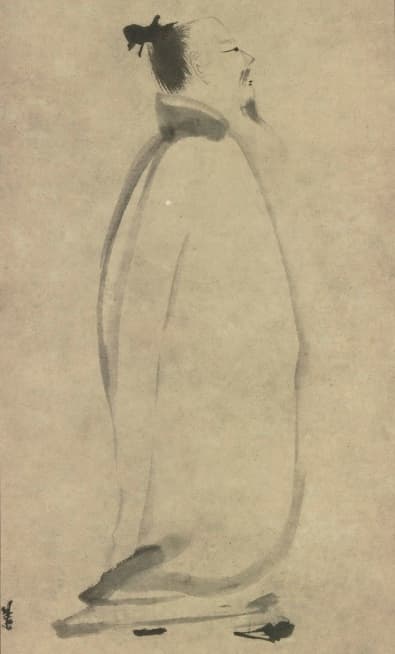
Author
Li Bai
- Lived
- Lived 701 CE to 762 CE
- From
- From Chinese
- Born in
- Born in Sichuan, China
Born around 701 AD, the exact date and place remain disputed, Li Bai grew up in Sichuan province during the Tang dynasty, the golden age of Chinese poetry. Some accounts place his birth in Suyab, in what is now Kyrgyzstan, among the Central Asian trade routes. His family may have been merchants who had lived beyond the empire's borders. By his twenties, Li Bai had left home to wander the mountains and rivers of China, living as a Taoist recluse, drinking prodigiously, and writing poems that would make him, alongside his younger contemporary Du Fu, the most celebrated poet in Chinese history. Around a thousand of his poems survive. In 742, his reputation reached the court of Emperor Xuanzong, who summoned him to the capital, Chang'an, and appointed him to the Hanlin Academy. But Li Bai's drunkenness and arrogance offended court officials, legend holds he once demanded that the powerful eunuch Gao Lishi remove his boots, and he was dismissed after two years. The An Lushan Rebellion of 755 shattered the Tang golden age and upended Li Bai's life. He joined the retinue of Prince Lin, who attempted to establish a rival court, and when the prince's rebellion failed, Li Bai was arrested and sentenced to exile in remote Yelang. He was pardoned before reaching his destination. His poems, "Quiet Night Thought," "Bring in the Wine," "The Hard Road to Shu", celebrate friendship, solitude, moonlight, and above all wine, with a luminous spontaneity that has never been surpassed. He died in 762, possibly of mercury poisoning from Taoist elixirs, though legend insists he drowned while drunkenly reaching from his boat to embrace the moon's reflection in the Yangtze River.
In 744 he met the young Du Fu, and for one autumn the two greatest poets in Chinese history wandered together, hunting, drinking, sharing a single room. They met once more, then parted for good. Du Fu spent years writing poems that missed his friend; Li Bai, already famous, answered with only one.
The first button needs the app on this device; the second gets it there.
In the canon
- Quiet Night Thoughts730 CE