
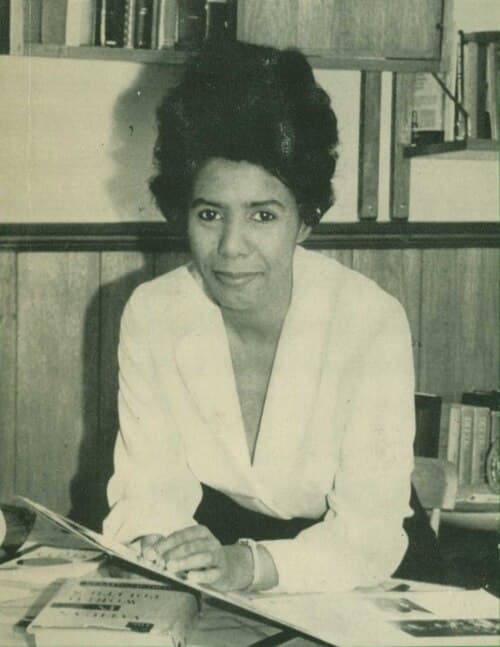
Author
Lorraine Hansberry
- Lived
- Lived 1930 to 1965
- From
- From American
- Born in
- Born in Chicago, Illinois
Born Lorraine Vivian Hansberry on May 19, 1930, on the South Side of Chicago, she grew up in a prominent African American family that fought actively against segregation. Her father, Carl Augustus Hansberry, a successful real estate broker, challenged restrictive housing covenants all the way to the United States Supreme Court in the landmark 1940 case Hansberry v. Lee. Despite the legal victory, the family faced constant hostility, a mob gathered outside their home in a white neighborhood, and someone threw a concrete slab through a window, narrowly missing young Lorraine. She attended the University of Wisconsin-Madison, where she became involved in campus politics and the Young Progressives of America, before moving to New York City in 1950. There she worked at Freedom, the Pan-Africanist newspaper run by Paul Robeson, and studied at the New School. A Raisin in the Sun, her first play, its title drawn from Langston Hughes's poem "Harlem", opened on Broadway on March 11, 1959, making Hansberry the first Black woman to have a play produced on Broadway. At twenty-nine, she became the youngest American and first Black dramatist to win the New York Drama Critics' Circle Award. The play explored the Younger family's struggles against poverty and racism in a cramped Chicago apartment. Hansberry wrote passionately about African liberation, feminism, and, in private writings published after her death, her own identity as a lesbian. She was diagnosed with pancreatic cancer in 1963. Her second play, The Sign in Sidney Brustein's Window, opened on Broadway on October 15, 1964. She died on January 12, 1965, at thirty-four. The play closed that night.
In 1938 her father moved the family into a restricted white neighborhood on Chicago's South Side. A mob gathered outside; a concrete slab crashed through the window, barely missing eight-year-old Lorraine. Her father took the fight to the Supreme Court and won. She took it to Broadway.
The first button needs the app on this device; the second gets it there.
In the canon
- A Raisin in the Sun1959