
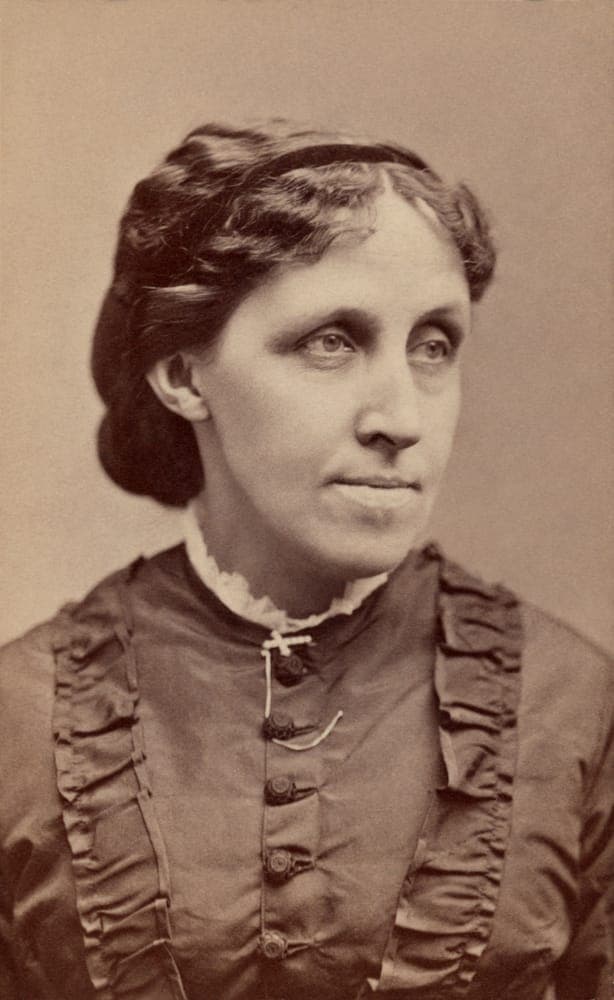
Author
Louisa May Alcott
- Lived
- Lived 1832 to 1888
- From
- From American
- Born in
- Born in Germantown, Pennsylvania
Born Louisa May Alcott on November 29, 1832, in Germantown, Pennsylvania, the second of four daughters of the Transcendentalist educator Amos Bronson Alcott and the social reformer Abigail May, she grew up in the company of Ralph Waldo Emerson, Henry David Thoreau, Margaret Fuller, and Nathaniel Hawthorne, in households that were often loving and almost always poor. Her father's experiments in cooperative living, including the doomed Fruitlands commune in 1843, kept the family in motion and in debt. From childhood she took on the work of feeding them, by sewing, by teaching, by domestic service, and by writing. She published lurid thrillers under the pen name A. M. Barnard, served as a nurse at the Union Hospital in Georgetown during the Civil War until typhoid fever and mercury poisoning nearly killed her, and turned the experience into Hospital Sketches (1863), her first popular success. Asked by an editor to write "a girls' book," she produced Little Women (1868) in ten weeks, drawing the March sisters and their absent father from her own family in Concord, Massachusetts. The novel sold out its first printing in a month and made her financially independent for the rest of her life. She continued the family chronicle in Little Men (1871) and Jo's Boys (1886), and remained an abolitionist, a suffragist, and an unmarried woman by deliberate choice, raising her dead sister's daughter in her final years. Her health, broken in the war, never recovered. She died in Boston on March 6, 1888, at the age of fifty-five, two days after her father's death, and was buried near him in Sleepy Hollow Cemetery in Concord.
On 29 March 1880, twenty women, Alcott among them, arrived to vote in Concord's school-committee election, the first ballots cast by women in the town's history. Her father suggested they vote first. All twenty rose and walked to the front together. 'No bolt fell on our audacious heads,' she wrote, 'no earthquake shook the town.'
Is it not meningitis?
The first button needs the app on this device; the second gets it there.
In the canon
- Little Women1868
- Work: A Story of Experience1873
- The Inheritance1997