
Author
Lucretius
- Lived
- Lived 99 BCE to 55 BCE
- From
- From Roman
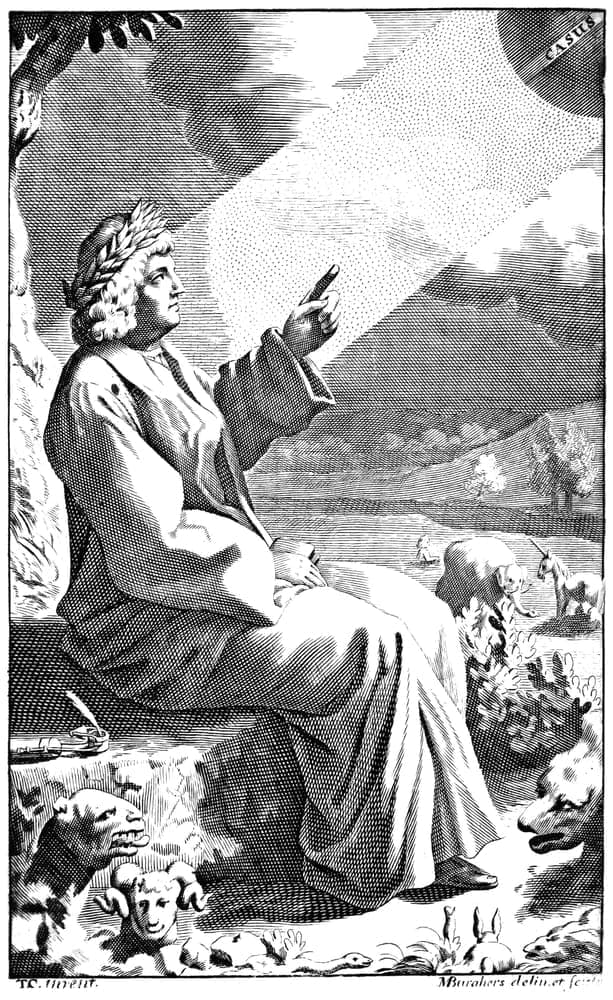
Born around 99 BCE, probably into the aristocratic gens Lucretia, Titus Lucretius Carus left almost no biographical trace beyond his single surviving poem and a few hostile sentences in later writers. Saint Jerome, writing more than four centuries after his death, claimed that he was driven mad by a love philtre administered by his wife Lucilia, composed his work in the lucid intervals between fits, and killed himself in his forty-fourth year. The story is generally treated as Christian propaganda against Epicurean atheism, but it has clung to him. He was certainly a Roman of leisure, expensively educated in Greek and Latin, deeply read in the philosophy of Epicurus three centuries before his time. The poem De rerum natura, On the Nature of Things, in some 7,400 lines of dactylic hexameter divided into six books, addressed to his patron Gaius Memmius, sets out the entire Epicurean physics of an atomic universe operating by chance and necessity, with no providence and no afterlife, and aims to free the human mind from the fear of the gods and the fear of death. The opening invocation of Venus and the closing portrait of the plague at Athens have moved readers from Virgil and Horace to Tennyson and Santayana. The work was nearly lost in the Middle Ages. Poggio Bracciolini found a single manuscript in a German monastery in 1417, and copies multiplied from there into the seedbed of Renaissance materialism and Enlightenment atomism. Lucretius died around 55 BCE, in his middle forties; the late biographer Donatus, quoting an earlier life of Virgil, reports that he died on the day Virgil came of age and put on the toga virilis.
The first button needs the app on this device; the second gets it there.
In the canon
- On the Nature of the Universe55 BCE
- De Rerum Natura55 CE