
Author
Madame de La Fayette
- Lived
- Lived 1634 to 1693
- From
- From French
- Born in
- Born in Paris, France
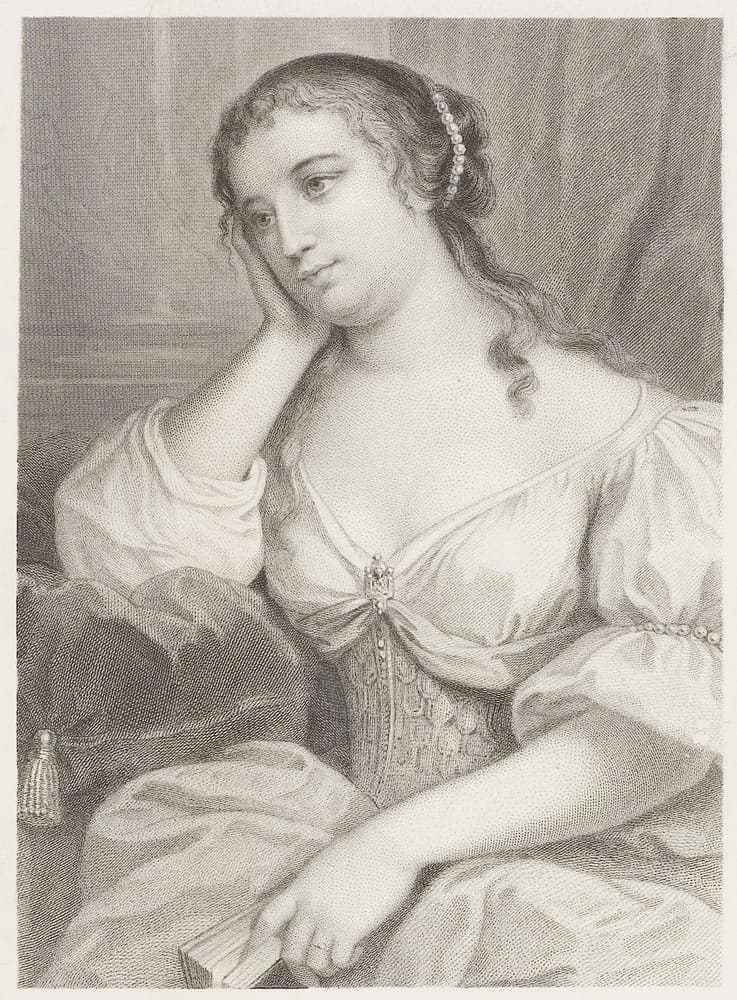
Born Marie-Madeleine Pioche de la Vergne in Paris and baptised on March 18, 1634, at the Church of Saint-Sulpice, she was the eldest daughter of a minor noble who served as esquire to the king and tutor to Cardinal Richelieu's nephew, and of a mother of physician's stock; her godfather was the Marshal of France and her godmother a niece of Richelieu. At sixteen she became a maid of honour to Queen Anne of Austria. Her father died the year before; her widowed mother soon married Renaud de Sévigné, uncle of the marquise de Sévigné, who would remain her closest friend for life. She learned Italian and Latin from the humanist Gilles Ménage and entered the salons of Madame de Rambouillet and Mademoiselle de Scudéry. In 1655 she married François Motier, comte de La Fayette, a widower eighteen years her senior, with whom she had two sons before he effectively disappeared into the Auvergne. From 1659 she lived in Paris, holding her own salon and cultivating an intimacy with the duc de La Rochefoucauld, author of the Maximes, that endured until his death in 1680. La Princesse de Montpensier appeared anonymously in 1662; Zaïde, published under the name of Segrais, in 1670 and 1671. La Princesse de Clèves, also published anonymously, appeared in March 1678, recounting the doomed passion of the princess for the duc de Nemours at the court of Henri II and her almost monastic refusal to give in to it. It is widely held to be the first French historical novel and the first true psychological novel in European literature. She died in Paris on May 25, 1693, aged fifty-nine, and was buried at Saint-Sulpice, where she had been baptised.
When La Princesse de Clèves appeared in March 1678, it carried no author's name. Segrais, the poet, later admitted only to having 'some part in the arrangement,' while readers just as often credited her closest friend, the duc de La Rochefoucauld. Her name was not attached to the book she had written until 1780, nearly a century after her death.
The first button needs the app on this device; the second gets it there.
In the canon
- The Princess of Cleves1678
- La Princesse de Clèves1678