
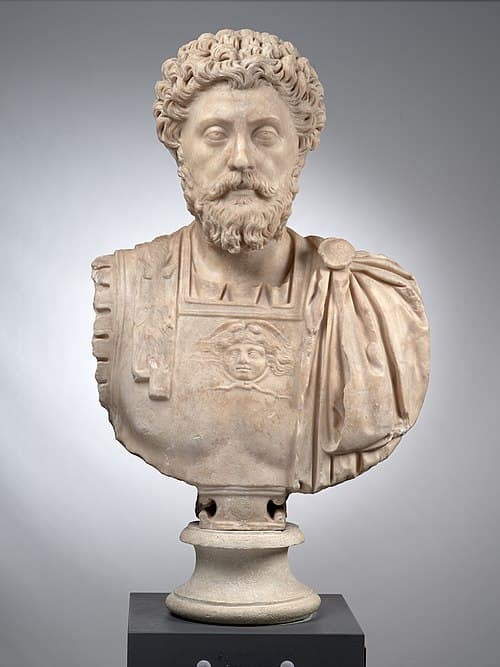
Author
Marcus Aurelius
- Lived
- Lived 121 CE to 180 CE
- From
- From Roman
- Born in
- Born in Rome, Roman Empire
Born Marcus Annius Verus on April 26, 121 AD, in Rome, into a family of Spanish origin that had risen to senatorial rank, Marcus Aurelius was raised by his grandfather after his father, the praetor Marcus Annius Verus, died when the boy was three. The Emperor Hadrian noticed the child's seriousness and arranged for his adoption into the imperial succession: Hadrian adopted Antoninus Pius, who in turn adopted the young Marcus alongside Lucius Verus. Marcus studied Greek and Latin under distinguished tutors, including the rhetorician Marcus Cornelius Fronto, whose surviving correspondence reveals a warm and affectionate student-teacher bond. He married Faustina, daughter of Antoninus Pius, in 145. When Antoninus died in 161, Marcus became emperor, voluntarily sharing power with his adoptive brother Lucius Verus, an act of co-rule without precedent. His reign was consumed by crises: the Parthian War in the East, the devastating Antonine Plague that killed millions across the empire, and the Marcomannic Wars along the Danube frontier, where Germanic tribes threatened Rome's northern borders. It was in his tent during these northern campaigns, likely never intending publication, that Marcus composed the Meditations, twelve books of private reflections written in Greek, addressed to himself, on duty, impermanence, suffering, and the discipline of desire. They constitute the most intimate surviving document of ancient Stoic philosophy. The last of the "Five Good Emperors" and the last ruler of the Pax Romana, Marcus died on March 17, 180 AD, probably at Vindobona (modern Vienna) or possibly Sirmium, likely of the plague that had ravaged his empire. His son Commodus succeeded him, and the golden age ended.
At twelve, Marcus adopted a philosopher's dress and discipline: a rough Greek cloak, plain food, and nights spent sleeping on the bare ground. His mother, alarmed, pressed him to soften the regime. He gave way only far enough to sleep on a couch strewn with animal skins.
Go to the rising sun; I am already setting.
The first button needs the app on this device; the second gets it there.
In the canon
- Meditations180 CE