
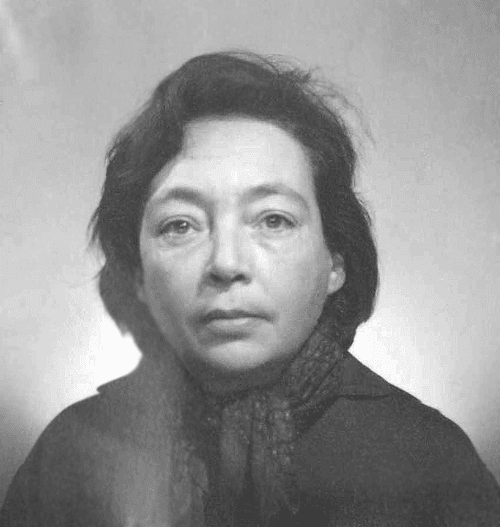
Author
Marguerite Duras
- Lived
- Lived 1914 to 1996
- From
- From French
- Born in
- Born in Gia Định, French Indochina (now Vietnam)
Born Marguerite Germaine Marie Donnadieu on April 4, 1914, in Gia Dinh, near Saigon, in French Indochina, now Vietnam, the daughter of two French schoolteachers who had met in the colony. Her father, Henri Donnadieu, fell ill and returned to France, where he died in 1921 when Marguerite was seven. Her mother, Marie Legrand, made a disastrous investment in an isolated rice farm in Prey Nob, Cambodia, battling the Pacific tides that yearly destroyed her crops, a saga Duras would fictionalize in The Sea Wall (1950). At fifteen, Duras began a clandestine affair with a wealthy Chinese-Vietnamese man, an experience she returned to obsessively throughout her career, most famously in The Lover (1984), which won the Prix Goncourt and made her, at seventy, a bestselling author. She moved to Paris in 1933, studied law and political economy, and took a position at the Ministry of the Colonies. During World War II, she worked for the Vichy government's book-censorship office before joining the Resistance alongside Francois Mitterrand, who became a lifelong friend. Her husband Robert Antelme was deported to Buchenwald in 1944 and nearly died, weighing just thirty-eight kilograms on his release. She nursed him back to health; they divorced once he recovered. She adopted the surname Duras, after her father's hometown. Her screenplay for Alain Resnais's Hiroshima mon amour (1959) earned an Academy Award nomination. Moderato Cantabile (1958), Le Ravissement de Lol V. Stein (1964), and the film India Song (1975) pushed her art toward minimalism, silence, and the unsaid. She struggled with alcoholism for decades. She died on March 3, 1996, in Paris, at eighty-one.
When Jean-Jacques Annaud began filming The Lover, Duras turned on the book that had made her famous. 'It's a load of shit,' she told him. 'An airport novel. I wrote it when I was drunk.' She then wrote The North China Lover, her own furious rematch with the same story.
The first button needs the app on this device; the second gets it there.
In the canon
- The Sea Wall1950
- Moderato Cantabile1958
- Hiroshima Mon Amour1959
- The Afternoon of Monsieur Andesmas1962
- The Ravishing of Lol Stein1964
- The Vice-Consul1966
- The Lover1984
- The War1985
- Practicalities1987