
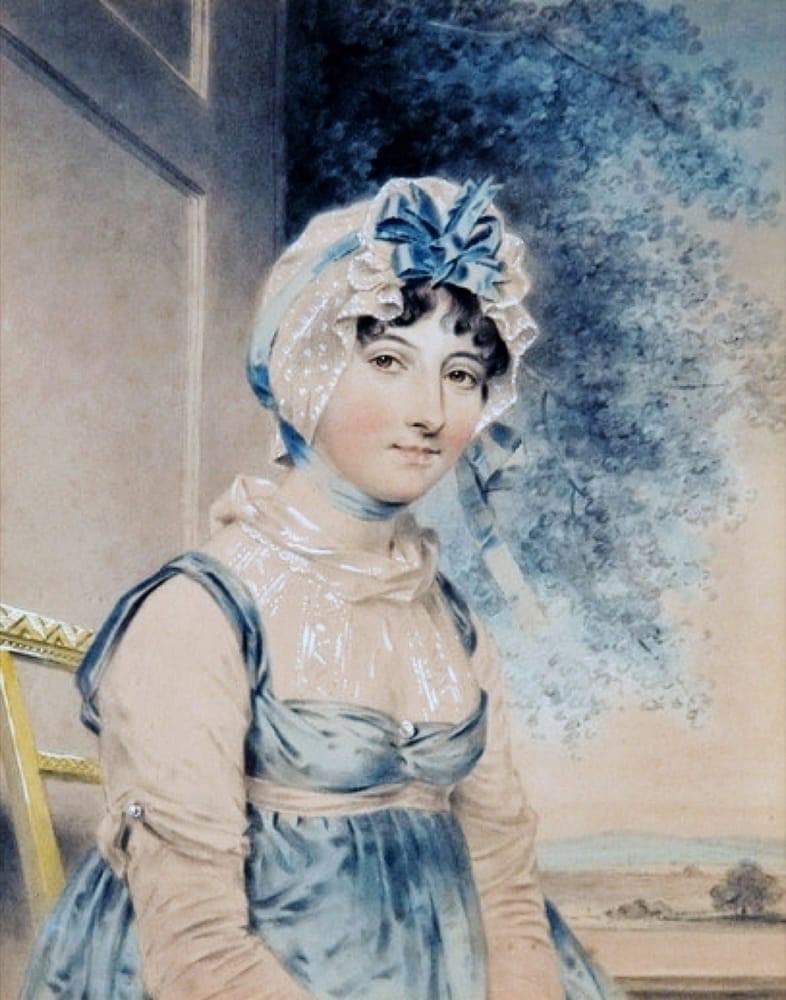
Author
Maria Edgeworth
- Lived
- Lived 1768 to 1849
- From
- From Anglo-Irish
- Born in
- Born in Black Bourton, England
Born on January 1, 1768, in Black Bourton, Oxfordshire, England, the third child of the inventor and educational reformer Richard Lovell Edgeworth, who married four times and fathered twenty-two children, she moved at fifteen to the family estate at Edgeworthstown, County Longford, in Ireland. There she helped manage the property, taught her many younger siblings, and became her father's collaborator and amanuensis, a partnership that shaped nearly everything she wrote. Practical Education (1798), composed with him, applied Enlightenment ideas to the raising of children. Her first fiction grew from the schoolroom and the estate office. Castle Rackrent (1800), narrated by the loyal old servant Thady Quirk in colloquial Irish speech, traced the ruin of a careless landlord family across four generations and is often called the first regional novel and the first historical novel in English. Belinda (1801) and the moral tales of The Parent's Assistant entered countless nurseries. She turned next to the fashionable English world in Leonora (1806) and to Ireland again in Ennui (1809), The Absentee (1812), and Ormond (1817). Walter Scott credited her example with prompting his own Waverley novels, and the two became friends, visiting each other across the Irish Sea. She refused a proposal from the Swedish courtier Abraham Niclas Clewberg-Edelcrantz in 1803 and never married. During the Great Famine she worked to relieve the starving tenantry around Edgeworthstown, drawing on her American admirers, who sent food in her name. She wrote little in her last decades, devoting herself to her family and her estate. She died on May 22, 1849, at Edgeworthstown, in the arms of her stepmother, aged eighty-one.
During the Great Famine, admirers in Boston sent a shipment of flour across the Atlantic for the hungry tenants around Edgeworthstown. The porters who carried it ashore refused to be paid for the work. Edgeworth, then in her late seventies, thanked each of them with a woollen comforter she had knitted with her own hands.
The first button needs the app on this device; the second gets it there.
In the canon
- Castle Rackrent1800
- Ennui1809
- The Absentee1812