
Author
Mariama Bâ
- Lived
- Lived 1929 to 1981
- From
- From Senegalese
- Born in
- Born in Dakar, Senegal
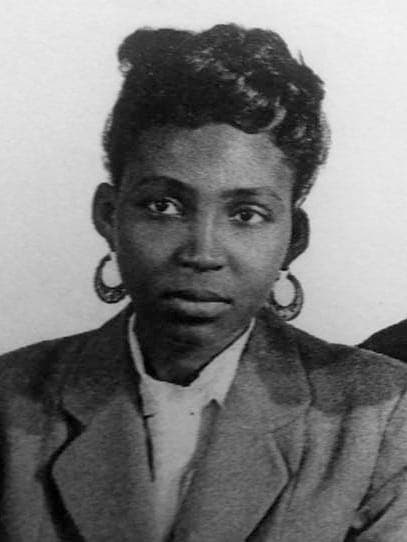
Born Mariama Bâ on April 17, 1929, in Dakar, in French West Africa, to a family of the Lebu ethnic group; her father Amadou Bâ was a civil servant who later became Senegal's minister of health, and her mother died when Mariama was four, leaving her grandparents to raise her in a traditional Muslim household. Her grandmother wanted her kept from school, but her father insisted, and in 1943, aged fourteen, Bâ won the highest score in a competitive examination held across all of French West Africa to enter the École Normale de Rufisque, the region's sole teacher-training college for girls, where she studied under the director Germaine Le Goff. She graduated in 1947 and taught for the next twelve years before ill health moved her into a post as a regional schools inspector. Married three times, an unusual course for a Senegalese Muslim woman, she divorced her third husband, the politician and journalist Obèye Diop, and was left to raise their nine children alone. Through the 1960s and 1970s she became a prominent women's rights activist, founding the feminist association Cercle Fémina and lecturing internationally on the condition of African women. Her debut novel, Une si longue lettre (So Long a Letter, 1979), an epistolary account of a Senegalese widow contending with polygamy and abandonment, won the inaugural Noma Award for Publishing in Africa in 1980 and made her an overnight figurehead of African feminist writing, a label she herself resisted as too Western a term for what she called simply telling the truth about women's lives. She died of cancer in Dakar on August 17, 1981, at fifty-two, months before her second novel, Un Chant écarlate (Scarlet Song), reached print.
At fourteen, Mariama sat the entrance exam for the École Normale de Rufisque, French West Africa's sole teacher-training college for girls, over her grandmother's objections that a girl belonged at home, not in a classroom. She scored highest in the entire federation. Her father, who had fought for this chance, enrolled her that year.
The first button needs the app on this device; the second gets it there.
In the canon
- So Long a Letter1980