
Author
Mário de Andrade
- Lived
- Lived 1893 to 1945
- From
- From Brazilian
- Born in
- Born in São Paulo, Brazil
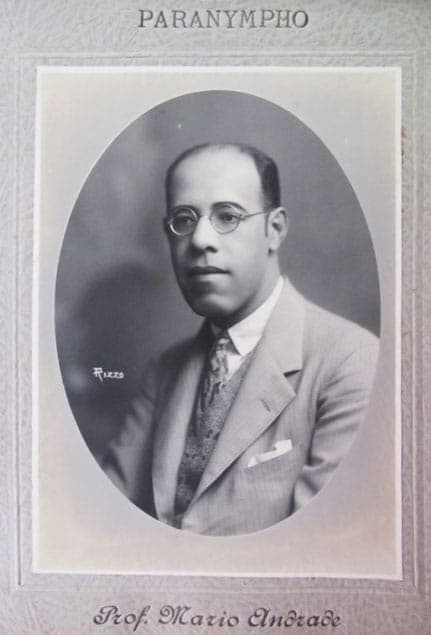
Born Mário Raul de Morais Andrade on October 9, 1893, in São Paulo, he trained as a pianist at the city's Conservatório Dramático e Musical from childhood, joining its faculty in 1921. In 1913 his fourteen-year-old brother Renato died suddenly during a football match, and Andrade's hands began to tremble uncontrollably soon after, a tremor that stayed with him and closed off any path to the concert stage. He turned to poetry instead, publishing a first collection under the pseudonym Mário Sobral in 1917, and by 1922 he was the driving force behind the Week of Modern Art, the festival of readings and exhibitions that launched Brazilian modernism; his own recitation of the free verse collection Hallucinated City that week met with jeers from an audience unprepared for it. In 1926, at a borrowed farmhouse in Araraquara, he read a German ethnologist's account of an Amazonian trickster figure and wrote the entire first draft of Macunaíma in six days; the finished novel, published in 1928, is a wild, slang-rich myth of Brazilian identity that became the cornerstone of the country's modernist literature. From 1935 he directed São Paulo's newly founded Department of Culture, sending research teams into the northeastern interior to record folk music and oral traditions in what became one of the largest folklore archives in the hemisphere, work that continued even after political change cost him the post in 1937 and sent him to Rio de Janeiro the following year. He kept his attractions to other men almost entirely private, in a country and era that offered little room for the admission, and his closest friendships, with the poets Manuel Bandeira and Carlos Drummond de Andrade, were carried on mostly through thousands of letters. He returned to São Paulo in 1941 to prepare a collected edition of his own poems, still unfinished when he died of a heart attack at home on February 25, 1945, at the age of fifty-one.
In 1926, at a borrowed farmhouse in Araraquara, Andrade read a German ethnologist's account of an Amazonian trickster and sat down to write. Six days later he had a draft of Macunaíma, working so fast he called it a joke. A year and a half of revision followed before he risked publishing it.
The first button needs the app on this device; the second gets it there.