
Author
Martin Luther King Jr.
- Lived
- Lived 1929 to 1968
- From
- From American
- Born in
- Born in Atlanta, Georgia
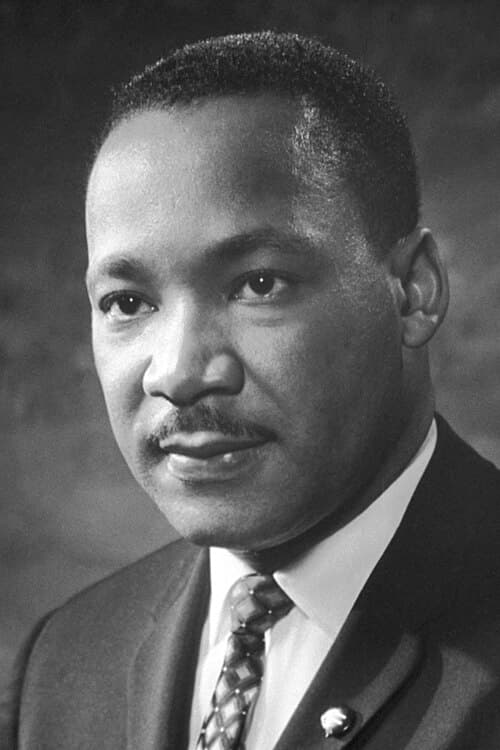
Born Michael King Jr. on January 15, 1929, in Atlanta, Georgia, in the upstairs bedroom of his maternal grandparents’ home on Auburn Avenue, he was the son and grandson of Baptist ministers. His father changed both their names to Martin Luther King after a 1934 trip to Germany inspired by the Protestant reformer. A precocious student, King skipped two grades and entered Morehouse College at fifteen, was ordained at eighteen, and earned a doctorate in systematic theology from Boston University in 1955, the same year he led the Montgomery bus boycott that launched the modern civil rights movement. As the first president of the Southern Christian Leadership Conference, he organized nonviolent campaigns against segregation whose moral clarity and strategic brilliance forced the conscience of a nation , in Birmingham (1963), where fire hoses and police dogs turned against children shocked the world, and in Selma (1965), where marchers crossing the Edmund Pettus Bridge were beaten on Bloody Sunday. His "I Have a Dream" speech, delivered on August 28, 1963, before 250,000 people at the March on Washington, remains the defining piece of American oratory in the twentieth century. "Letter from Birmingham Jail" (1963), written on newspaper margins smuggled out of his cell, stands as a masterwork of moral philosophy and epistolary prose. He was awarded the Nobel Peace Prize in 1964 at thirty-five, then the youngest recipient. He was assassinated on April 4, 1968, on the balcony of the Lorraine Motel in Memphis, Tennessee, where he had gone to support striking sanitation workers. He was thirty-nine years old.
In September 1958, signing copies of his first book in a Harlem department store, King was stabbed in the chest by a woman wielding a letter opener. The blade came to rest beside his aorta. Surgeons said afterward that a single sneeze could have killed him, and it took hours to remove.
Ben, make sure you play 'Take My Hand, Precious Lord' in the meeting tonight. Play it real pretty.
The first button needs the app on this device; the second gets it there.
In the canon
- Loving Your Enemies1957
- Stride Toward Freedom1958
- I Have a Dream1963
- Letter from Birmingham Jail1963