
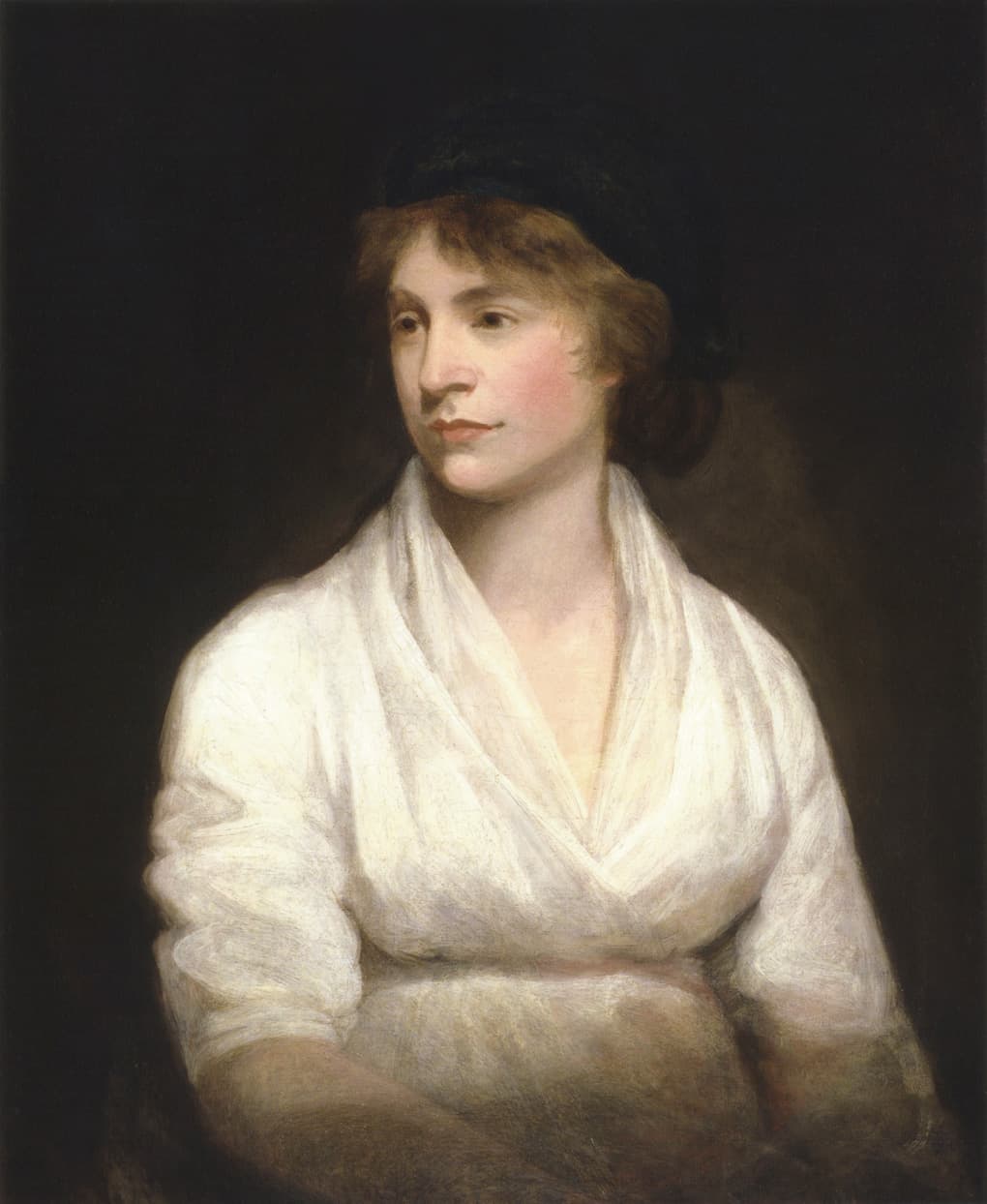
Author
Mary Wollstonecraft
- Lived
- Lived 1759 to 1797
- From
- From English
- Born in
- Born in Spitalfields, London
Born on April 27, 1759, in Spitalfields, London, the second of seven children of a failed gentleman farmer whose drunken rages drove the family through a succession of increasingly desperate homes, Wollstonecraft educated herself and escaped by working as a lady's companion, governess, and schoolmistress before arriving in London's radical intellectual circles. She taught herself French and German and became a translator, reviewer, and writer for the publisher Joseph Johnson, who gathered around him a circle that included William Blake, William Godwin, and Thomas Paine. When Edmund Burke published his Reflections on the Revolution in France in 1790, Wollstonecraft was the first to answer, producing A Vindication of the Rights of Men within weeks. Two years later she published A Vindication of the Rights of Woman (1792), arguing with devastating clarity that women were not naturally inferior but had been made so by a denial of education and independence, and that a society which kept half its members in ignorance could never call itself free. She traveled to revolutionary Paris, where she witnessed the Terror firsthand and began an affair with the American adventurer Gilbert Imlay, by whom she had a daughter, Fanny. When Imlay abandoned her, she twice attempted suicide. She later married the philosopher William Godwin, but died on September 10, 1797, of puerperal fever, eleven days after giving birth to her second daughter, Mary, who would grow up to write Frankenstein.
In October 1795, after Gilbert Imlay ended their relationship, Wollstonecraft walked Putney Bridge in the rain for half an hour, soaking her skirts to weigh herself down, then jumped into the Thames. Two watermen pulled her from the water. She later called it one of the calmest acts of reason she had ever performed.
He is the kindest, best man in the world.
The first button needs the app on this device; the second gets it there.
In the canon
- Mary: A Fiction1788
- A Vindication of the Rights of Men1790
- A Vindication of the Rights of Woman1792
- Letters Written During a Short Residence in Sweden, Norway, and Denmark1796
- Maria: or, The Wrongs of Woman1798