
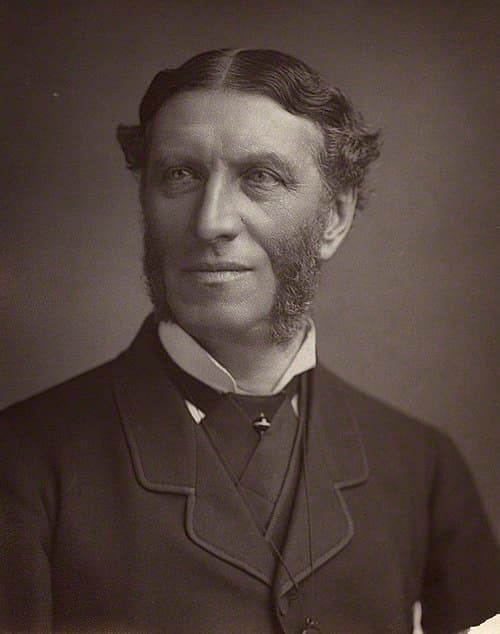
Author
Matthew Arnold
- Lived
- Lived 1822 to 1888
- From
- From English
- Born in
- Born in Laleham, England
Born on December 24, 1822, in Laleham, a village on the Thames in Surrey, Matthew Arnold grew up in the long shadow of his father, Thomas Arnold, the formidable headmaster of Rugby School whose moral earnestness helped define Victorian education. Educated at Winchester, Rugby, and Balliol College, Oxford, where he won the Newdigate Prize for poetry in 1843, Arnold cultivated a dandyish persona that masked a deepening melancholy about the spiritual condition of his age. His early poetry , "The Scholar-Gypsy" (1853), "Dover Beach" (composed around 1851, published 1867), "Sohrab and Rustum" (1853), and the elegy "Thyrsis" (1866) for his friend Arthur Hugh Clough , expressed with haunting musicality the condition of being caught between a dying faith and a world not yet born, "wandering between two worlds, one dead, / The other powerless to be born." "Dover Beach," with its retreating Sea of Faith and its image of ignorant armies clashing by night, became perhaps the most frequently anthologized poem of the Victorian era. In 1851 he was appointed an inspector of schools, a post he held for thirty-five years, travelling tirelessly across England to examine elementary classrooms. His prose criticism , Culture and Anarchy (1869), Essays in Criticism (1865, 1888), and Literature and Dogma (1873) , argued that culture, the pursuit of "the best which has been thought and said," was the only force capable of saving democracy from its own vulgarity. He died suddenly of a heart attack on April 15, 1888, in Liverpool, while running to greet his daughter at the tramway.
In June 1851, newly married, Arnold brought his wife Frances Lucy to Dover. From their window the moonlit strait lay calm and the French coast gleamed, while on the shingle below the sea drew back with a long, grating roar. That view opens Dover Beach.
The first button needs the app on this device; the second gets it there.
In the canon
- The Scholar Gipsy1853
- Stanzas from the Grande Chartreuse1855
- The Function of Criticism at the Present Time1864
- Thyrsis1866
- Dover Beach1867
- Culture and Anarchy1869