
Author
Max Beerbohm
- Lived
- Lived 1872 to 1956
- From
- From English
- Born in
- Born in London, England
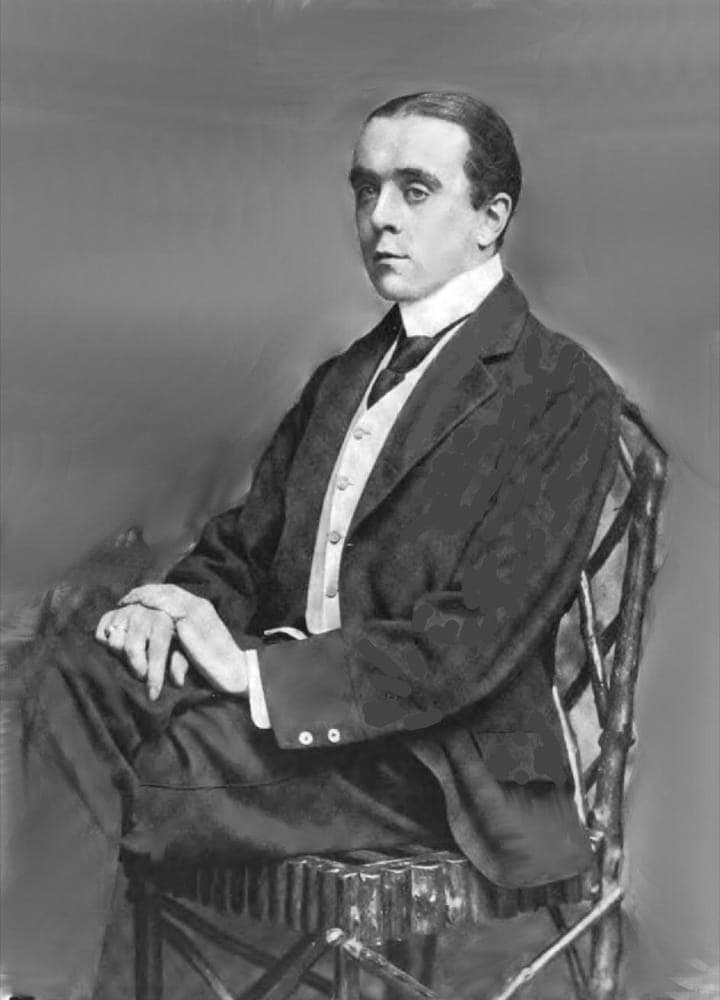
Born Henry Maximilian Beerbohm on August 24, 1872, in London, he was the youngest child of a Lithuanian-born corn merchant and the half-brother of the celebrated actor-manager Herbert Beerbohm Tree, in whose theatrical world he moved easily from boyhood. He went up from Charterhouse to Merton College, Oxford, where he cultivated a dandy's poise, befriended Oscar Wilde's circle, and left in 1894 without taking a degree. By then he was already publishing essays and caricatures, and at twenty-four he gathered his first slim collection under the deliberately overripe title The Works of Max Beerbohm (1896), followed by the fable The Happy Hypocrite (1897). George Bernard Shaw, retiring from the Saturday Review in 1898, handed over the theatre column and christened him "the incomparable Max." His sole novel, Zuleika Dobson (1911), set in an Oxford where every undergraduate drowns himself for love of a beautiful conjuror, is a comic fantasy of fastidious cruelty. A Christmas Garland (1912) parodied Henry James, Kipling, and Conrad with such precision that the targets half admired it; Seven Men (1919) invented the doomed poet Enoch Soames, who sells his soul to read his own future reputation. He drew caricatures of the eminent with affectionate malice, collected in Rossetti and His Circle (1922) among other volumes. In 1910 he married the American actress Florence Kahn and settled in Rapallo on the Italian Riviera, where he lived in genial seclusion for decades, broadcasting wartime talks for the BBC. He was knighted in 1939. He died at Rapallo on May 20, 1956, aged eighty-three, his ashes later interred in St Paul's Cathedral.
In 1898 George Bernard Shaw resigned as theatre critic of the Saturday Review and handed the column to a twenty-five-year-old dandy who had barely finished a book. In his farewell piece Shaw introduced his successor with a single phrase that outlived them both: the incomparable Max.
The first button needs the app on this device; the second gets it there.
In the canon
- The Works of Max Beerbohm1902
- Zuleika Dobson1911
- Seven Men And Two Others1919