
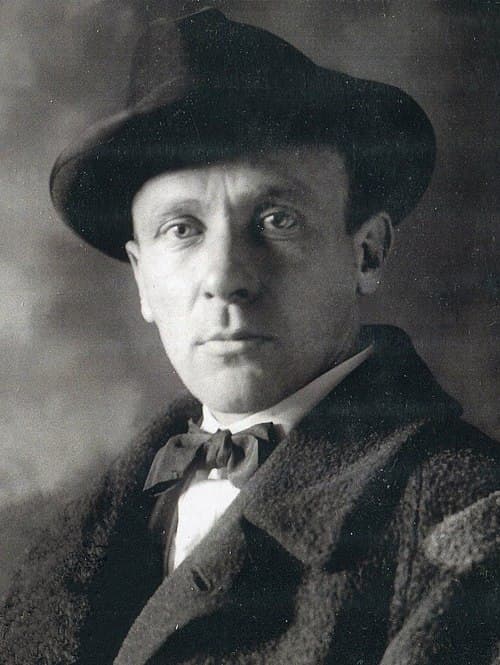
Author
Mikhail Bulgakov
- Lived
- Lived 1891 to 1940
- From
- From Russian
- Born in
- Born in Kyiv, Ukraine
Born on May 15, 1891, in Kyiv, then part of the Russian Empire, Mikhail Afanasyevich Bulgakov was the eldest of seven children in a cultivated family , his father was a professor of theology at the Kyiv Theological Academy. He studied medicine at Kyiv University, graduating in 1916, and served as a frontline physician during World War I before practicing in rural hospitals, an experience that inspired the autobiographical stories of A Country Doctor’s Notebook (1925–1927). He abandoned medicine for literature in 1919 amid the chaos of the Russian Civil War, whose horrors in Kyiv he transmuted into his first novel, The White Guard (1925). His dramatization of that novel, The Days of the Turbins, became a sensation at the Moscow Art Theatre , Stalin himself reportedly attended at least fifteen performances, even personally telephoning the theater to demand its production after the play was banned. Yet by 1929, all of Bulgakov’s works were prohibited from publication and performance, and he wrote a desperate letter to the Soviet government begging to be allowed to emigrate. Stalin telephoned him personally, in a conversation that became legendary, and arranged a position as assistant director at the Moscow Art Theatre. In obscurity and failing health, Bulgakov spent twelve years writing The Master and Margarita, a phantasmagoric novel in which the Devil visits Stalinist Moscow, interleaved with chapters retelling the Passion of Christ. He dictated final revisions to his wife Elena from his deathbed, dying of nephrosclerosis on March 10, 1940, at the age of forty-eight. The novel was not published until 1966, a quarter century after his death, and is now considered one of the masterpieces of twentieth-century literature.
In the spring of 1930, banned from print and stage, Bulgakov burned the draft of his novel about the devil and wrote to the Soviet government asking to be allowed to emigrate. On 18 April his telephone rang. It was Stalin. The dictator asked whether he really wished to leave. Bulgakov answered that a Russian writer cannot live outside his homeland.
The first button needs the app on this device; the second gets it there.
In the canon
- The White Guard1925
- The Fatal Eggs1925
- Heart of a Dog1925
- The Days of the Turbins1926
- Black Snow1965
- A Dead Man's Memoir (A Theatrical Novel)1965
- The Master & Margarita1967