
Author
Mohamed Mbougar Sarr
- Lived
- Lived born 1990
- From
- From Senegalese
- Born in
- Born in Dakar, Senegal
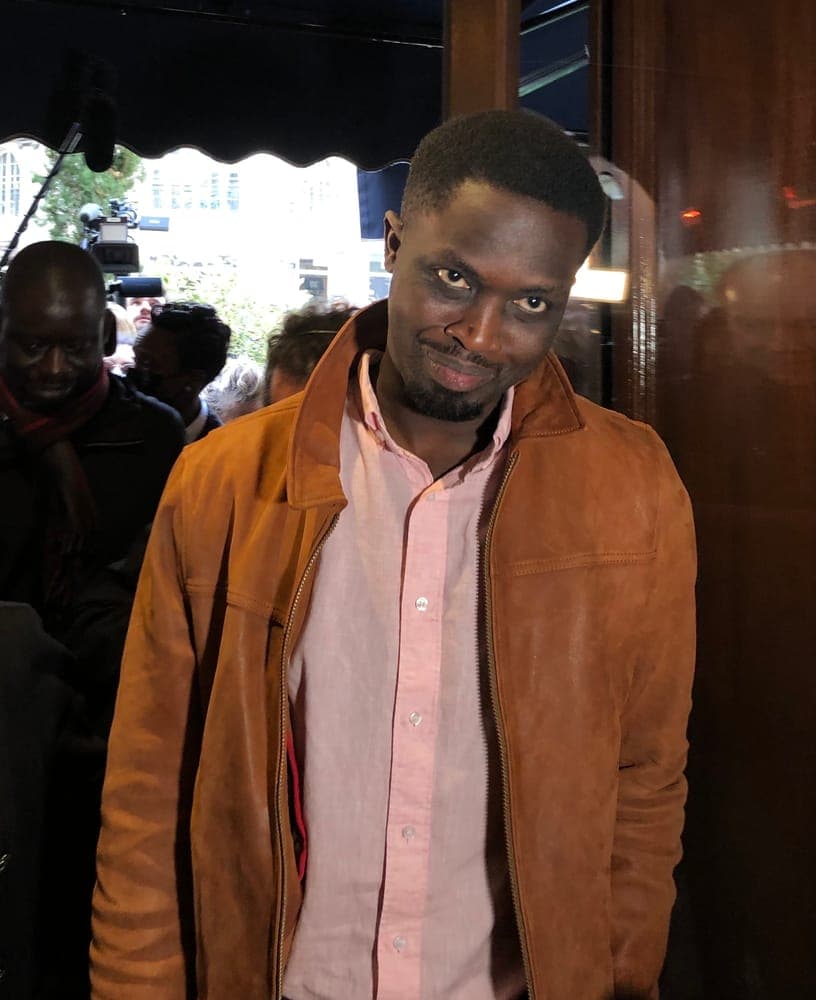
Born June 20, 1990, in Dakar, Sarr was raised in the market town of Diourbel in a large Serer family, the son of a doctor. His earliest sense of story came from his maternal grandmother, who spoke her tales aloud and changed them each retelling; when he called her out for it as a boy, she told him she was altering the story on purpose. He attended the Prytanee militaire de Saint-Louis, Senegal's elite lycee, from 2002, then left for France on a scholarship to a preparatory class at the Lycee Pierre-d'Ailly in Compiegne. In Paris he enrolled at the Ecole des Hautes Etudes en Sciences Sociales to write a doctoral thesis on the poet and former president Leopold Sedar Senghor, then set the thesis aside, unfinished, for fiction. His short story 'La Cale,' about the slave trade, won the Prix Stephane-Hessel in 2014, the same year he published his debut novel, Terre ceinte, set in a fictional Sahelian village seized by jihadist militants; it won the Grand Prix du Roman Metis and the Prix Ahmadou-Kourouma in 2015. Silence du choeur (2017) followed African migrants through a reception center in Sicily, and De purs hommes (2018) confronted the violence surrounding homosexuality in Senegal. His fourth novel, La plus secrete memoire des hommes (2021), follows a young Senegalese writer in Paris hunting the truth behind a vanished, mythic book and its disgraced author; dedicated to the Malian novelist Yambo Ouologuem, whose own literary career collapsed in a 1968 plagiarism scandal, it won the Prix Goncourt on the jury's first ballot, making Sarr the first sub-Saharan African laureate in the prize's history and, at 31, its youngest winner since 1976. He held the spring 2023 writer-in-residence chair at Sciences Po in Paris, where he led workshops on memory and narrative time.
Between the ages of three and six, Sarr's only literature was his maternal grandmother's spoken tales, retold in Serer. When he noticed she changed details each time, she told him she was altering the story on purpose, not forgetting it. He later traced his own sense that form matters more than content back to that early confusion.
The first button needs the app on this device; the second gets it there.
In the canon
- The Most Secret Memory Of Men2021