
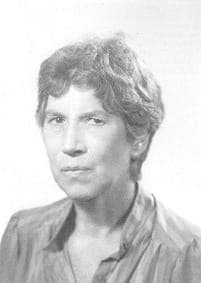
Author
Natalia Ginzburg
- Lived
- Lived 1916 to 1991
- From
- From Italian
- Born in
- Born in Palermo, Italy
Natalia Ginzburg was born Natalia Levi in Palermo, Sicily, on July 14, 1916, and grew up in Turin, the youngest of five children in a boisterous, argumentative household headed by her father, the histologist Giuseppe Levi, a Jewish scientist whose thunderous table manners and stock phrases she would later immortalize in Family Sayings. She began publishing stories as a teenager and married the anti-fascist intellectual and publisher Leone Ginzburg in 1938, with whom she had three children. When Mussolini's racial laws barred Jewish writers from publishing, she released her first novel under the pseudonym Alessandra Tornimparte. Leone was sent into internal exile in a remote Abruzzo village for his opposition to fascism, and Natalia and their children lived there with him until the 1943 armistice, when the family fled to Rome to work underground on an anti-fascist newspaper. Leone was captured by the Nazi occupation, tortured, and died in Rome's Regina Coeli prison in February 1944, leaving Natalia a widow with three young children. She went into hiding for the rest of the war, then returned to Turin to work as an editor at the publishing house Einaudi, where she helped champion Primo Levi's If This Is a Man. Over the following decades she wrote novels, essays, and plays including All Our Yesterdays, The Little Virtues, Voices in the Evening, and, in 1963, her Strega Prize winning masterpiece Family Sayings. In 1950 she married the English literature scholar Gabriele Baldini, with whom she lived in Rome and London until his death in 1969. Late in life she served two terms as an independent deputy in the Italian Parliament, from 1983 until her death in Rome on October 7, 1991.
In the Abruzzo village where her husband was held in internal exile, the family lived through winters of motionless snow, buying oranges at the village shop while he wrote at a big oval table. Years later Ginzburg wrote that it had been the best time of her life, and that she understood this only once it was gone.
The first button needs the app on this device; the second gets it there.
In the canon
- All Our Yesterdays1952
- Voices In The Evening1961
- The Little Virtues1962
- Family Sayings1963
- Happiness, as Such1973