
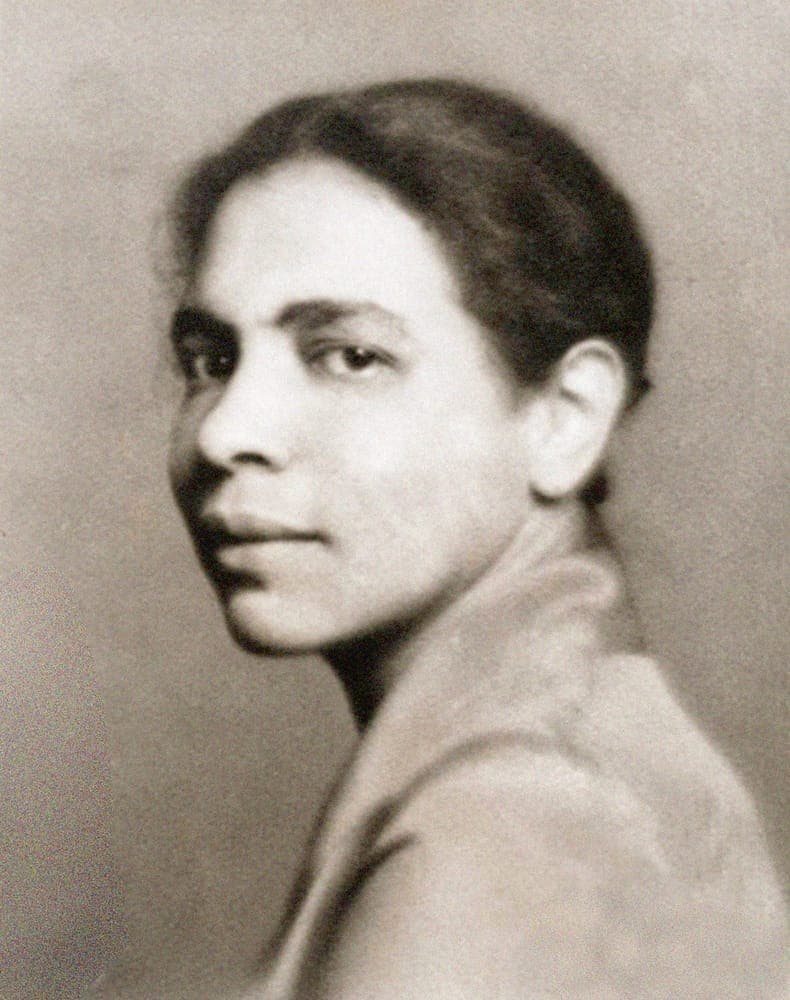
Author
Nella Larsen
- Lived
- Lived 1891 to 1964
- From
- From American
Born Nellie Walker on April 13, 1891, in the poor Levee district of south Chicago to a Danish immigrant seamstress and an Afro-Caribbean labourer from the Danish West Indies, Nella Larsen entered a world that had no place for her. Her father vanished within a year, her mother remarried a fellow Danish immigrant, and the mixed family moved among white Scandinavian neighbourhoods where the small dark daughter was an embarrassment. She spent three childhood years in Denmark with her mother's relatives, then attended Fisk University in Nashville at sixteen, the first time she lived among Black Americans, where she was expelled within a year along with ten other women, likely for breaching the dress code. She trained as a nurse at Lincoln Hospital in the Bronx, worked at Tuskegee under Booker T. Washington's widow, and eventually became the first Black woman to be awarded a Guggenheim Fellowship. Quicksand (1928), her first novel, follows the daughter of a white mother and a vanished Black father through Naxos, Harlem, Copenhagen, and the rural South, finding nowhere she can rest. Passing (1929), the leaner second book, traces two old schoolmates in Harlem, one of whom has crossed the colour line into a white marriage. A plagiarism charge over a short story, followed by an ugly divorce, broke her literary nerve. She returned to nursing at Gouverneur and Metropolitan Hospitals in Manhattan and never published again. She died alone in her Brooklyn apartment on or about March 30, 1964, at seventy-two, the body undiscovered for days. The New York Times notice gave no hint of her novels.
The first button needs the app on this device; the second gets it there.
In the canon
- Quicksand1928
- Passing1929