
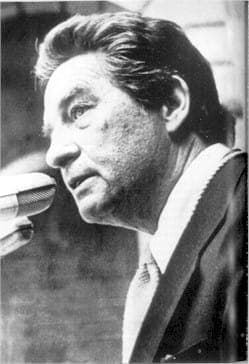
Author
Octavio Paz
- Lived
- Lived 1914 to 1998
- From
- From Mexican
- Born in
- Born in Mexico City, Mexico
Born Octavio Paz Lozano on March 31, 1914, in Mexico City, into a family unsettled by his father's involvement in the Mexican Revolution and steadied by his grandfather's crowded personal library, where Paz first lost himself in books. He published his first poetry collection, Luna silvestre, in 1933 at nineteen, and in 1937 traveled to Republican Spain for the Second International Congress of Anti-Fascist Writers, an experience of solidarity and horror that radicalized him for life; that same year he married the writer Elena Garro. Entering Mexico's foreign service in 1945, he was posted to Paris, where he fell into the orbit of André Breton and the surrealists, a friendship he later called a silent dialogue that ran through the rest of his poetry. The Labyrinth of Solitude (1950), a set of essays probing Mexican identity, solitude, and history, made him a defining voice of Mexican letters overnight. Piedra de Sol (Sunstone, 1957), a single unbroken 584-line poem built on the Aztec calendar's measure of Venus, confirmed him as a major poet on the world stage. In 1962 he was named Mexico's ambassador to India, a posting that deepened his lifelong engagement with Buddhist and Hindu thought; there he met Marie-José Tramini, whom he married in 1964. In October 1968, days after the Mexican army massacred student demonstrators at Tlatelolco, Paz resigned his ambassadorship in protest, an act that made him the country's most visible dissenting conscience. He founded and edited the magazines Plural and then Vuelta, the second running until his death, and won the Nobel Prize in Literature in 1990. A 1996 fire tore through his Mexico City apartment, destroying a lifetime of manuscripts and rare editions before he and Marie-José escaped through the smoke. Paz died of cancer on April 19, 1998, in Mexico City, at eighty-four; his state funeral in the Palacio de Bellas Artes drew mourners from across Mexican public life.
In January 1996, fire broke out in the Mexico City apartment where Paz and his wife Marie-Jose kept a lifetime of manuscripts, letters, and rare first editions, and the couple had to crawl out through the smoke on their hands and knees. Firefighters could not save the library; the government gave them a house on Francisco Sosa Street.
The first button needs the app on this device; the second gets it there.
In the canon
- The Labyrinth of Solitude1950