
Author
Orhan Pamuk
- Lived
- Lived born 1952
- From
- From Turkish
- Born in
- Born in Istanbul, Turkey
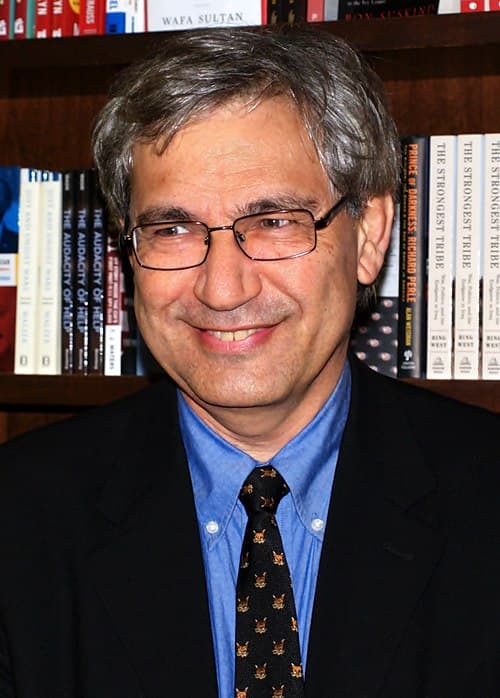
Born Ferit Orhan Pamuk on June 7, 1952, in Istanbul, into a wealthy, secular, Westernized family , his grandfather had made a fortune building railroads , he grew up in the affluent Nişantaşı district in an apartment building filled with relatives, an enclosed bourgeois world he would later recreate with Proustian detail in his memoir Istanbul: Memories and the City (2003). He studied architecture at Istanbul Technical University before abandoning it, much to his family’s dismay, to become a writer, spending years in a room in his family home producing manuscripts. His early novels , Cevdet Bey and His Sons (1982) and The Silent House (1983) , explored the decline of Ottoman-era families in the new Turkish republic. The White Castle (1985) brought international attention with its parable of identity exchange between a Venetian slave and an Ottoman scholar. My Name Is Red (1998), a philosophical murder mystery set among Ottoman miniature painters in 1591, won the International Dublin Literary Award and established him as one of the major novelists of the late twentieth century. Snow (2002), a political novel set in the eastern Turkish city of Kars, examined the collision between secularism and Islamism with a complexity that angered partisans on all sides. In 2005, he faced criminal prosecution under Turkish law for publicly acknowledging the Armenian genocide, charges that were eventually dropped amid international outcry. He was awarded the Nobel Prize in Literature in 2006, the first Turkish writer to receive it, cited for having "in the quest for the melancholic soul of his native city, discovered new symbols for the clash and interlacing of cultures." He holds a professorship at Columbia University.
On 16 December 2005, Pamuk arrived at an Istanbul courthouse to stand trial for "denigrating Turkishness," having told a Swiss newspaper that a million Armenians and thirty thousand Kurds were killed in Turkey and no one dared discuss it. Nationalist protesters pelted him with eggs as he left; the case collapsed weeks later on a technicality.
The first button needs the app on this device; the second gets it there.
In the canon
- Cevdet Bey And His Sons1982
- The Black Book1990
- The New Life1994
- My Name Is Red1998
- Snow2002
- Istanbul2003
- The Museum Of Innocence2008