
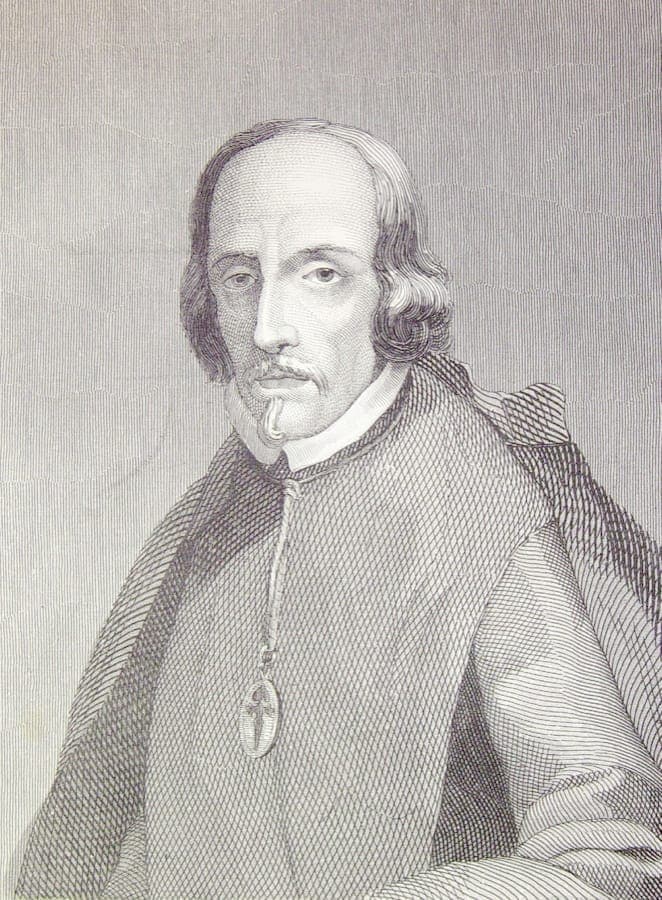
Author
Pedro Calderón de la Barca
- Lived
- Lived 1600 to 1681
- From
- From Spanish
- Born in
- Born in Madrid, Spain
Born on January 17, 1600, in Madrid, into a family of minor nobility, Pedro Calderón de la Barca was the son of a secretary to the royal treasury who pressed his ambitions hard upon his children. Educated by the Jesuits at the Colegio Imperial, he went on to study at Salamanca and Alcalá, where his father intended him for the priesthood, though the young man turned instead to the theater. By his early twenties he was writing for the court of Philip IV, and after the death of Lope de Vega in 1635 he became the foremost dramatist of the Spanish Golden Age. He served briefly as a soldier in Catalonia and Flanders before returning to the stage. Life Is a Dream (1635), the philosophical drama of the imprisoned prince Segismundo, who wakes unsure whether his life is waking or dream, became his most enduring play. He wrote comedies of intrigue such as The Phantom Lady (1629), tragedies of jealousy like The Surgeon of His Honor (1635), and the rural drama of peasant dignity The Mayor of Zalamea (around 1636). After the death of his mistress and their son, he took holy orders in 1651 and increasingly devoted himself to the autos sacramentales, allegorical religious plays performed at Corpus Christi, among them The Great Theater of the World. Named honorary chaplain to the king in 1663, he continued composing for the court until the end of his life. He died on May 25, 1681, in Madrid, at the age of eighty-one, having written more than a hundred and twenty plays and some eighty autos.
In 1629 Calderón and his brothers burst into the convent of the Trinitarian nuns in Madrid, chasing an actor. One of the nuns inside was Marcela, the daughter of Lope de Vega. Lope protested, and the court preacher Hortensio Paravicino denounced the raid in a sermon. Calderón answered by mocking the preacher in The Constant Prince, written that same year.
The first button needs the app on this device; the second gets it there.
In the canon
- Life Is a Dream1635