
Author
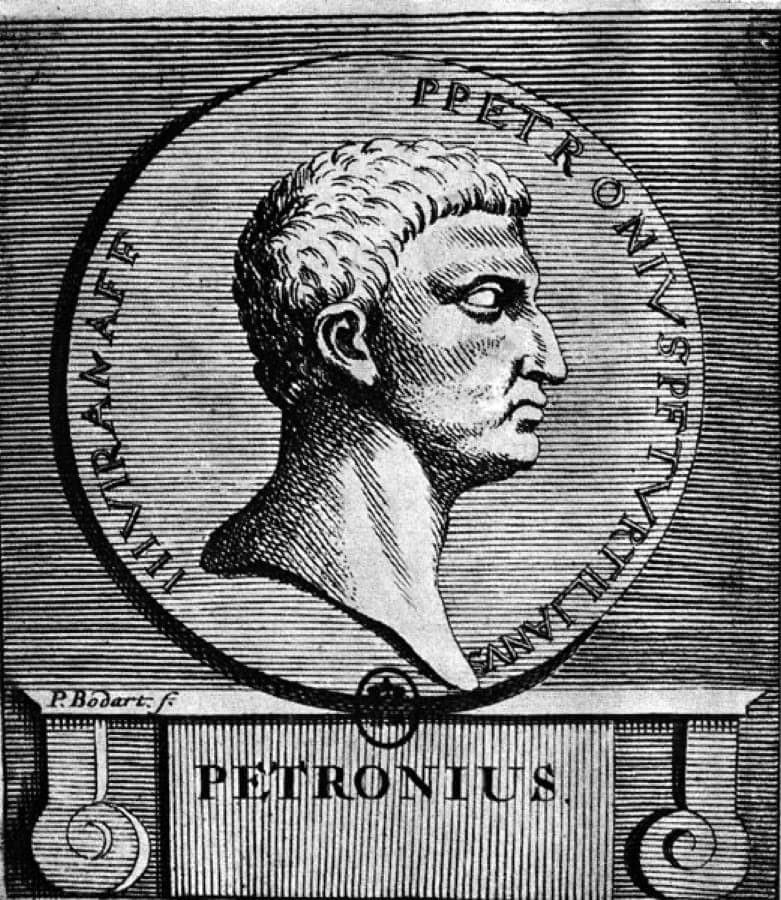
Petronius Arbiter
- Lived
- Lived 27 CE to 66 CE
- From
- From Roman
Born around 27 AD, possibly in Massalia, the Greek colony that became Marseille, where a reference by Sidonius Apollinaris places him or his great novel, Gaius Petronius Arbiter rose into the inner circle of the emperor Nero. The third name, Arbiter, was a kind of joke that stuck. Tacitus, Plutarch, and Pliny the Elder all call him the elegantiae arbiter, the judge of elegance, the man whose verdict on a banquet or a perfume the court awaited. He slept by day and lived by night, Tacitus writes, becoming as famous for idleness as other men for industry, yet he served capably as governor of Bithynia and then as suffect consul in 62, before returning to a studied life of pleasure. He is generally held to be the author of the Satyricon, the ribald, fragmentary Roman novel whose centerpiece, the dinner of the freedman Trimalchio, gives us the loudest, most lifelike banquet to survive from antiquity. The attribution rests on a single medieval manuscript and remains disputed, but the book reads like the work of a man who knew Nero's table from the inside. Envy did for him. Accused of treason by Tigellinus, commander of the guard, he was arrested at Cumae in 65 and chose not to await a sentence. Tacitus records the most composed of Roman suicides: he opened his veins, bound them, opened them again, dined, dozed, and listened to friends recite light verses rather than philosophy. In his will he catalogued Nero's debaucheries by name and sent the sealed account to the emperor, then broke his signet ring so it could imperil no one. He died around 66 AD.
The first button needs the app on this device; the second gets it there.