
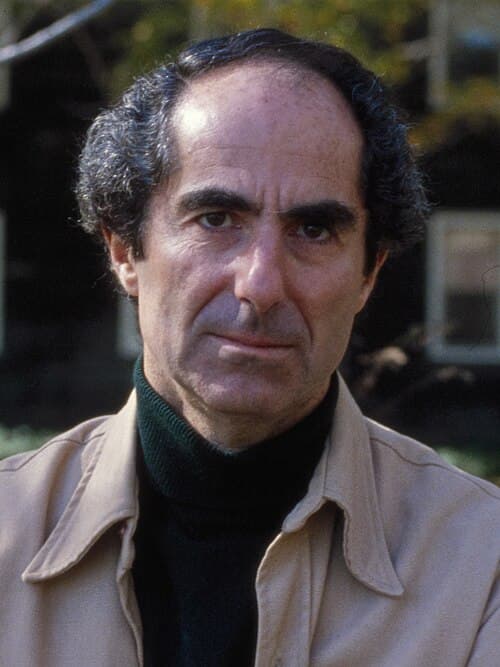
Author
Philip Roth
- Lived
- Lived 1933 to 2018
- From
- From American
- Born in
- Born in Newark, New Jersey
Born Philip Milton Roth on March 19, 1933, in Newark, New Jersey, the son of a first-generation American insurance salesman of Galician Jewish descent, Roth grew up in the Weequahic neighborhood, a setting that would recur throughout his fiction like a compass point. He studied English at Bucknell University and the University of Chicago, where he briefly taught and married his first wife, Margaret Martinson Williams, a disastrous union that ended in separation but not divorce; she died in a car accident in 1968. His debut, Goodbye, Columbus (1959), won the National Book Award and provoked outrage from rabbis who accused him of Jewish self-hatred. Portnoy's Complaint (1969), a comic monologue of sexual confession delivered from a psychiatrist's couch, made him famous and notorious in equal measure. Over the next five decades he produced more than thirty books, inventing and reinventing alter egos, Nathan Zuckerman, David Kepesh, "Philip Roth" himself, to probe the boundaries between fiction and autobiography. American Pastoral (1997) won the Pulitzer Prize; The Human Stain (2000) and The Plot Against America (2004) cemented his late-career authority. Harold Bloom named him one of the four greatest living American novelists. In 2012, Roth announced his retirement from writing, declaring he had given his "whole life" to the novel. He died on May 22, 2018, in Manhattan, of congestive heart failure, at eighty-five.
At seventy-four, sensing time running short, Roth reread the novels he had loved as a young man, Dostoevsky, Turgenev, Conrad, Hemingway, then reread his own work backward, starting with Nemesis. Satisfied he had nothing left to prove, he retired from fiction and pinned a note to his computer: the struggle with writing is over.
The first button needs the app on this device; the second gets it there.
In the canon, 13 works
- Goodbye, Columbus1959
- Portnoy's Complaint1969
- The Breast1972
- The Ghost Writer1979
- The Anatomy Lesson1983
- The Counterlife1986
- Patrimony1991
- Operation Shylock1993
- Sabbath's Theater1995
- American Pastoral1997
- The Human Stain2000
- The Plot Against America2004